Occasions · July 26, 2026
Moroccan Caftans for the Mother of the Bride or Groom
Choose a dignified Moroccan mother-of-the-bride or mother-of-the-groom caftan with the right formality, color, fit and accessories.
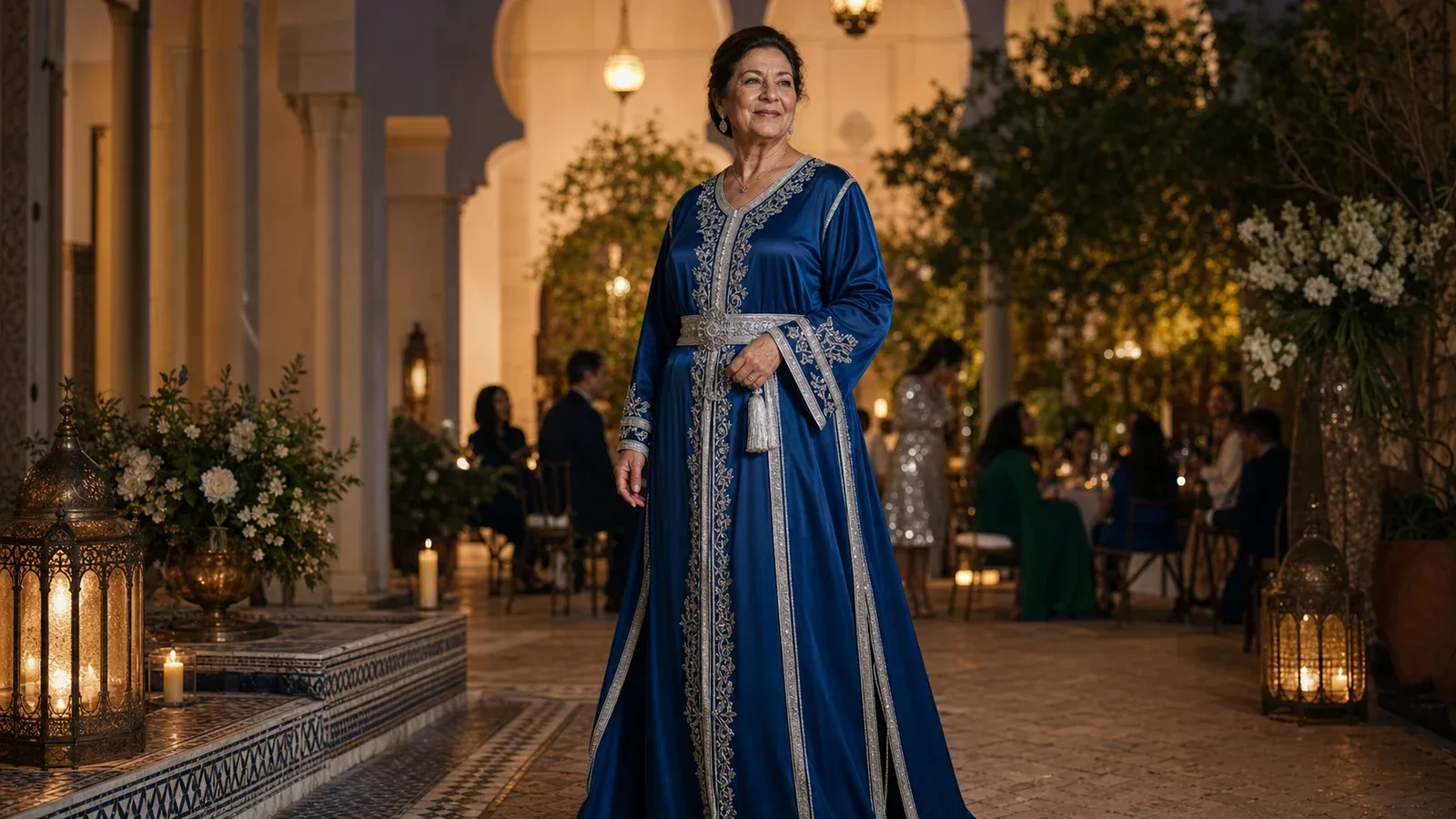
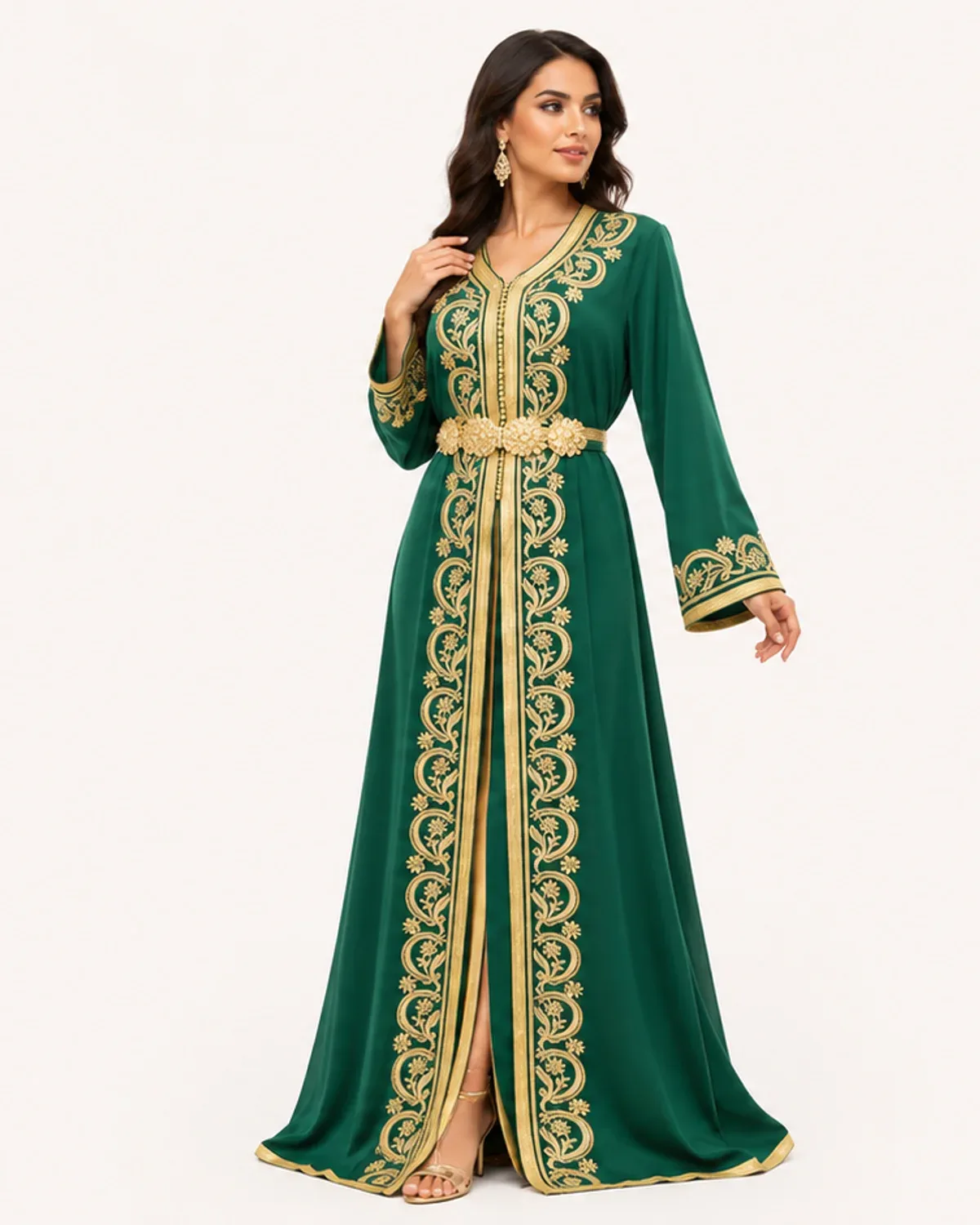
The mother of the bride or groom should choose a caftan or takchita that signals her important family role without sacrificing comfort. Rich fabric, precise Moroccan finishing, a distinguished color and one strong accessory create more authority than excessive weight or decoration.
Begin with family coordination
The two mothers do not need to match, but a short conversation prevents accidental duplication and uneven formality. Share:
- whether each plans a caftan or takchita;
- the main color family;
- whether the bride has reserved any color;
- how many wedding events require outfits;
- whether formal family portraits are planned.
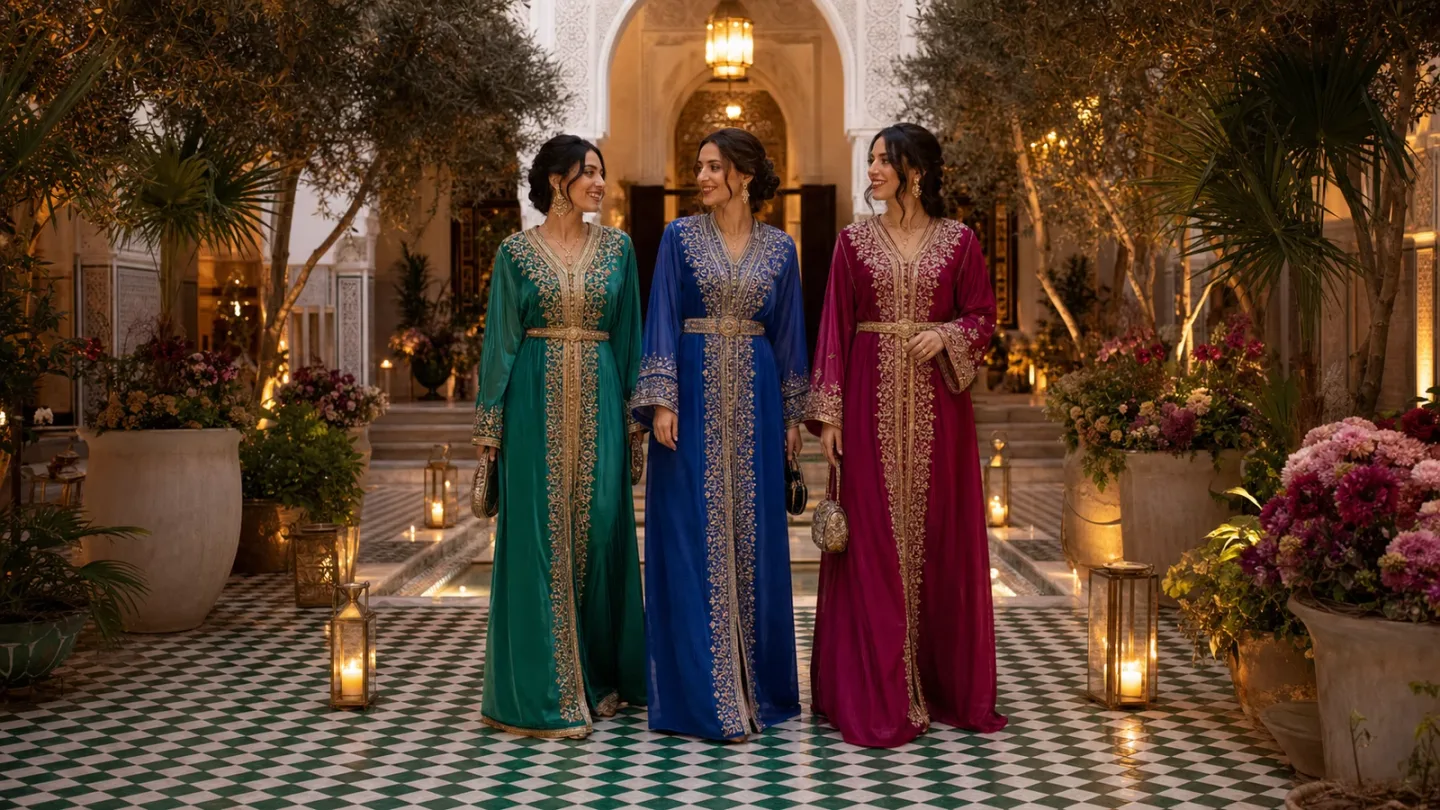
Coordination should create harmony, not a uniform. One mother might wear emerald and gold while the other chooses sapphire and silver.
Caftan or takchita for a wedding mother?
A takchita provides the greatest ceremony and is a natural option for the principal reception. A formal caftan is equally dignified when the fabric, embroidery and belt have presence, and it may be easier for greeting guests and moving throughout the venue.
Choose based on role, climate, body comfort and the family’s dress level. The caftan vs takchita guide provides a practical comparison.
Colors with presence
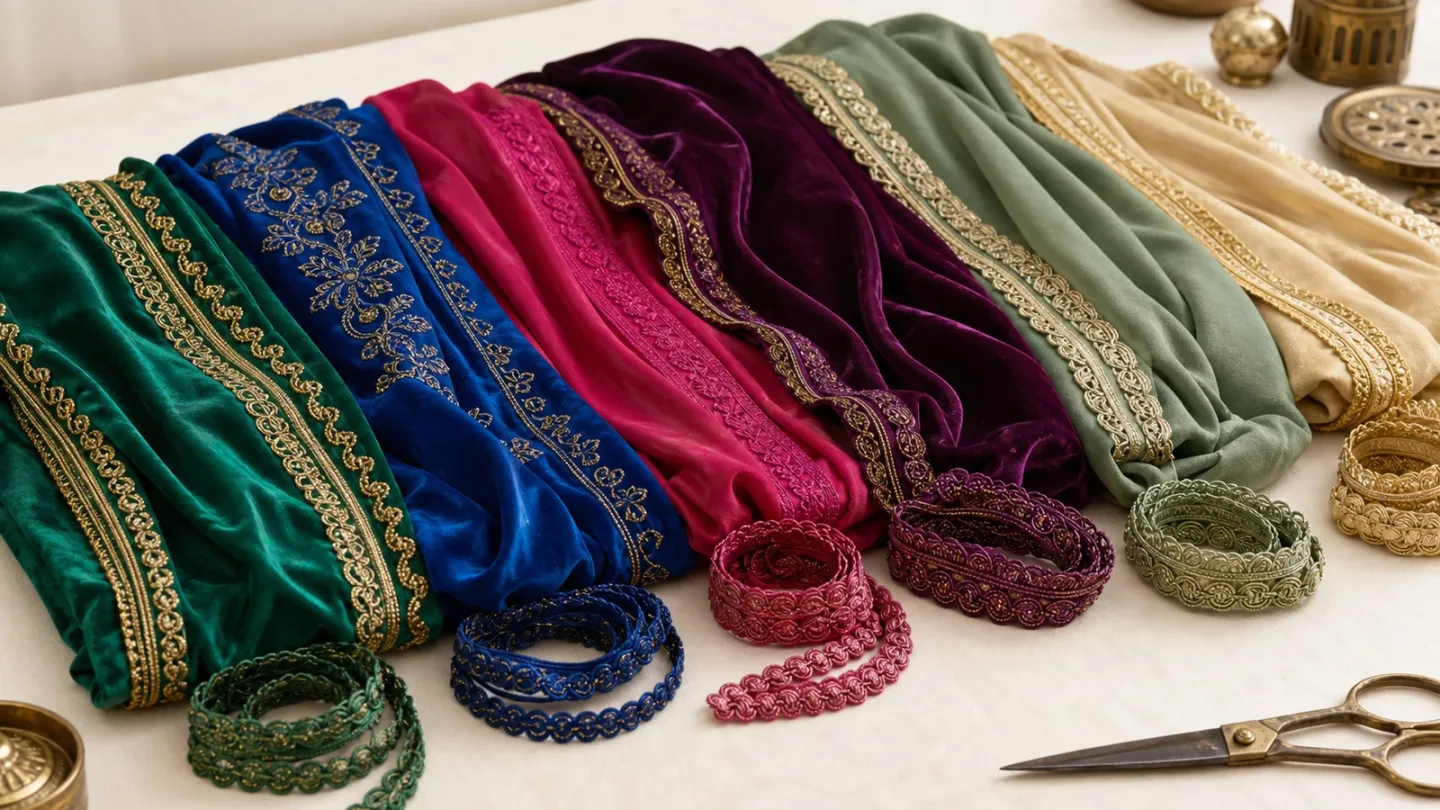
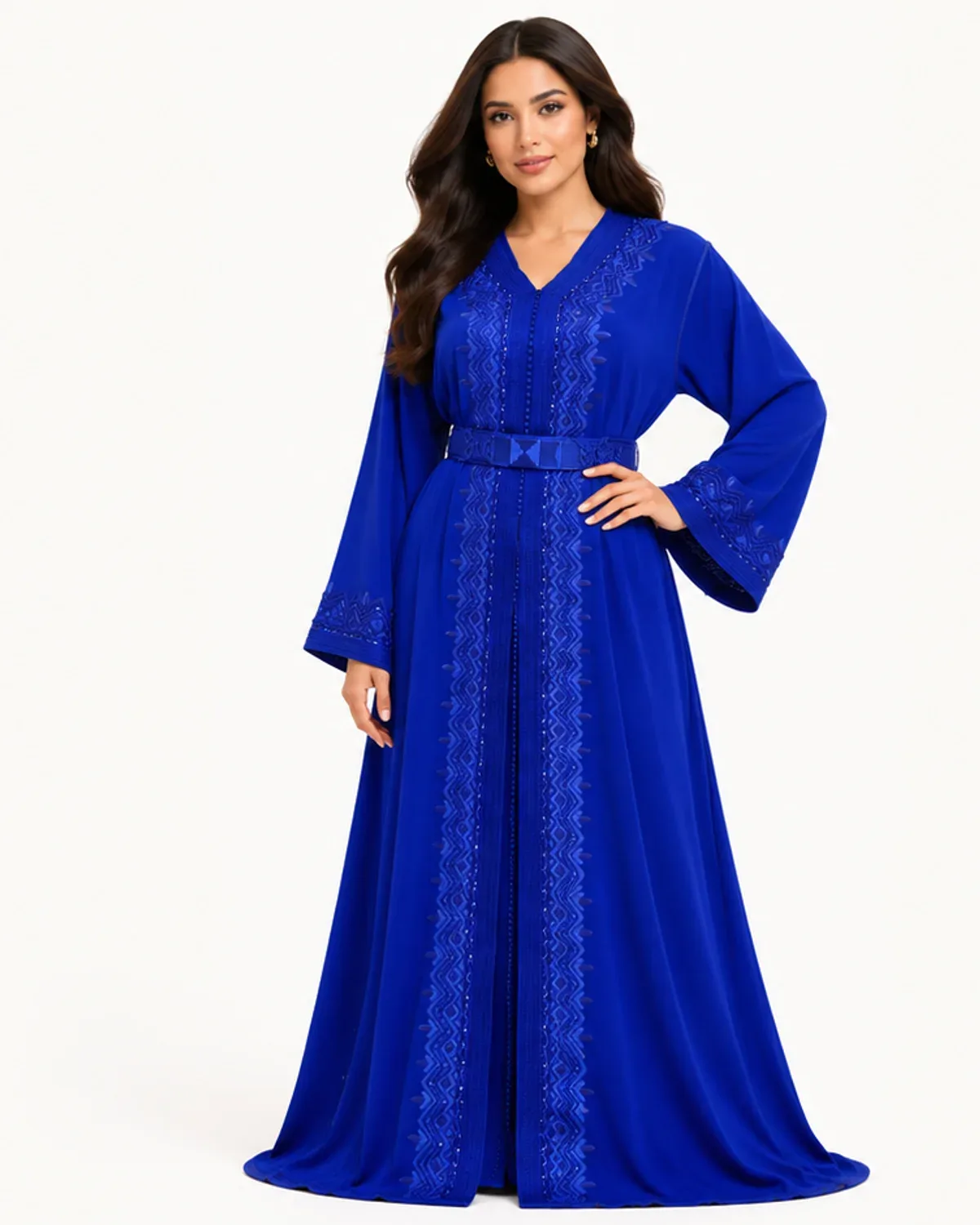
Emerald, sapphire, deep teal, plum, raspberry and midnight blue carry beautifully in family portraits. Soft gold, sage and dusty rose work for daylight or a mother who prefers quieter color.
White and ivory may be reserved for the bride or may be traditional for senior relatives, depending on the family. Confirm rather than assume. The same applies to black: a richly detailed black caftan can be elegant, while an austere all-black look may not suit the celebration.
Use the wedding guest caftan color guide to compare season and venue.
Fit for a visible, active role
Wedding mothers rarely sit quietly all evening. They greet relatives, pose for photographs, help coordinate family and dance. Fit must support that work.
Check that:
- shoulders and upper arms move freely;
- the belt remains comfortable after sitting;
- the neckline stays secure while greeting guests;
- the hem works on stairs and around tables;
- the sleeves do not catch on jewellery;
- the outfit feels balanced from front, side and back.
Use the Caftans Yasmine size guide and allow time for alterations. Centered embroidery must remain centered when the side seams change.
Embroidery and fabric
Quality reads more clearly than quantity. Look for symmetrical sfifa, secure aakad buttons, embroidery that lies smoothly and fabric with enough structure to hold its line.
For a summer wedding, choose less weight and concentrated decoration. For winter, structured crepe or velvet-like depth can support stronger embroidery. Our summer wedding caftan guide covers warm-weather planning.
Accessories for the mothers
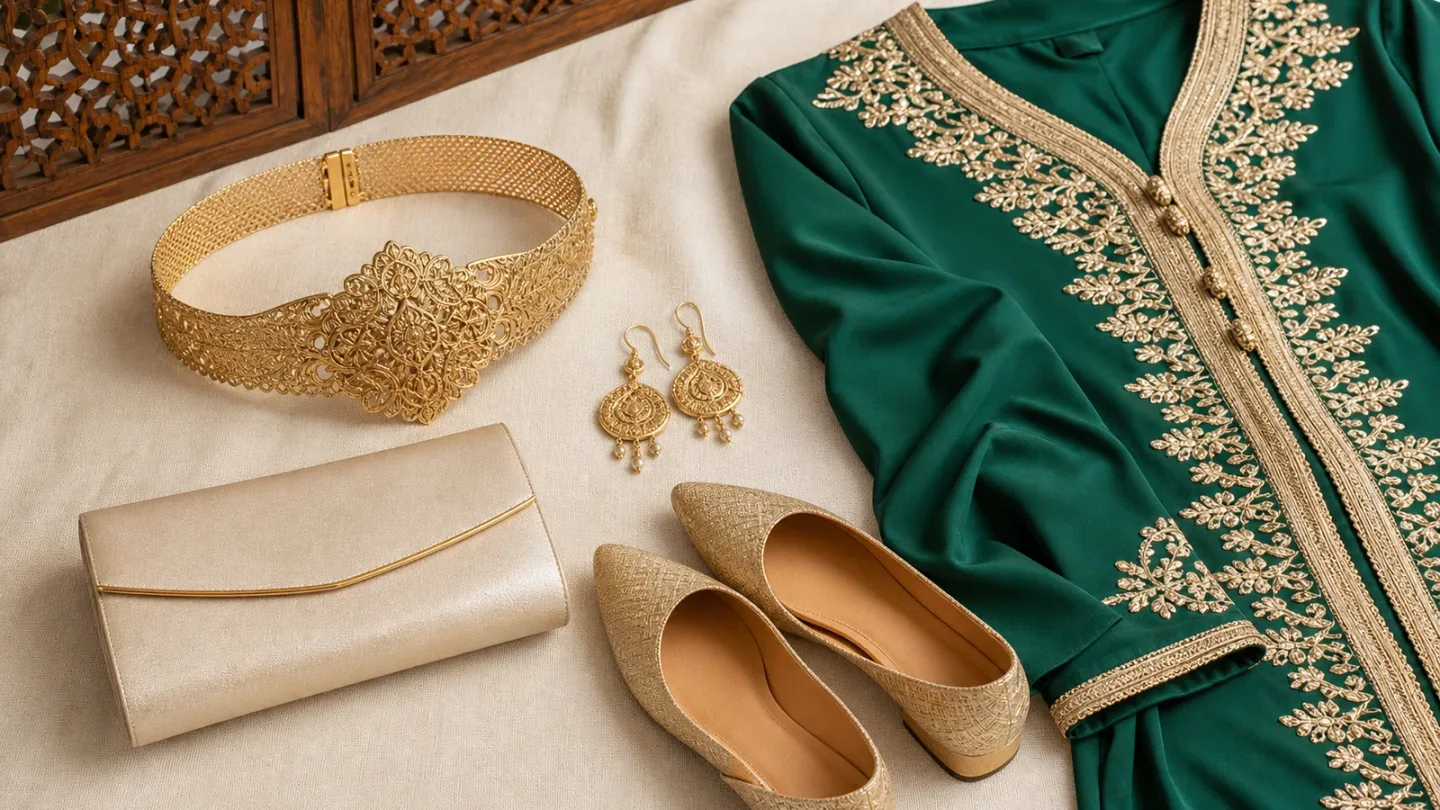
Choose one heirloom or statement element: important earrings, a family bracelet, a distinguished mdamma or a refined brooch placed where it will not damage fabric. Do not allow a necklace to cover the craftsmanship at the neckline.
Shoes should support hours of standing. A stable low heel or elegant flat is entirely appropriate when the hem is tailored for it. Use a small smooth bag or ask a trusted relative to hold essentials during formal entrances.
The Moroccan caftan accessories guide explains how to balance jewellery, belt and neckline.
Dressing for several wedding events
If there is a henna party, main reception and next-day gathering, reserve the most formal garment for the principal evening. A lighter caftan or jellaba can serve the henna gathering, while a modern set or soft caftan works the following day.
The same formal caftan can also be restyled with a different belt and jewellery. Thoughtful repetition is better than three uncomfortable purchases.
Should the mother avoid outshining the bride?
The bride’s ceremonial styling and entrances establish her role. A mother is expected to look important. The goal is coordination and respect, not deliberate invisibility.
Avoid copying an exact bridal color-and-embroidery combination when it has been announced. Otherwise, embrace formal Moroccan craft with confidence.
Order and fit early
A central family role leaves little room for rushed alterations. Begin early enough to confirm fabric, embroidery placement, sleeve movement, finished length and belt comfort. Bring the exact shoes to the fitting and sit for several minutes in the complete outfit.
If the caftan is made to order, provide measurements taken by another person rather than measuring over everyday clothing. Discuss where the mdamma will sit and whether the design can also be worn without it later. The best formal purchase serves the wedding beautifully and remains useful for future family celebrations.
Frequently asked questions
Must both mothers wear the same level of formality?
Not exactly, but a conversation is helpful. A very simple outfit beside an exceptionally grand takchita can look unplanned in family portraits.
Is a belt necessary?
No. It depends on the caftan’s construction and the wearer’s comfort. A well-cut unbelted caftan can look dignified.
Can an older woman wear a bright color?
Absolutely. Age does not require beige. Choose a color that illuminates the wearer and coordinate its embroidery thoughtfully.
A dignified final choice
Select the outfit around the woman, not an abstract role. She should recognize herself, move easily and feel appropriately celebrated as a central member of the family.
Explore women’s Moroccan caftans and read the complete wedding guest guide before confirming the family’s final color and formality plan.