Style guide · July 26, 2026
How to Accessorize a Moroccan Caftan
Style a Moroccan caftan with the right mdamma belt, jewellery, shoes, bag and hairstyle for weddings, parties and family celebrations.
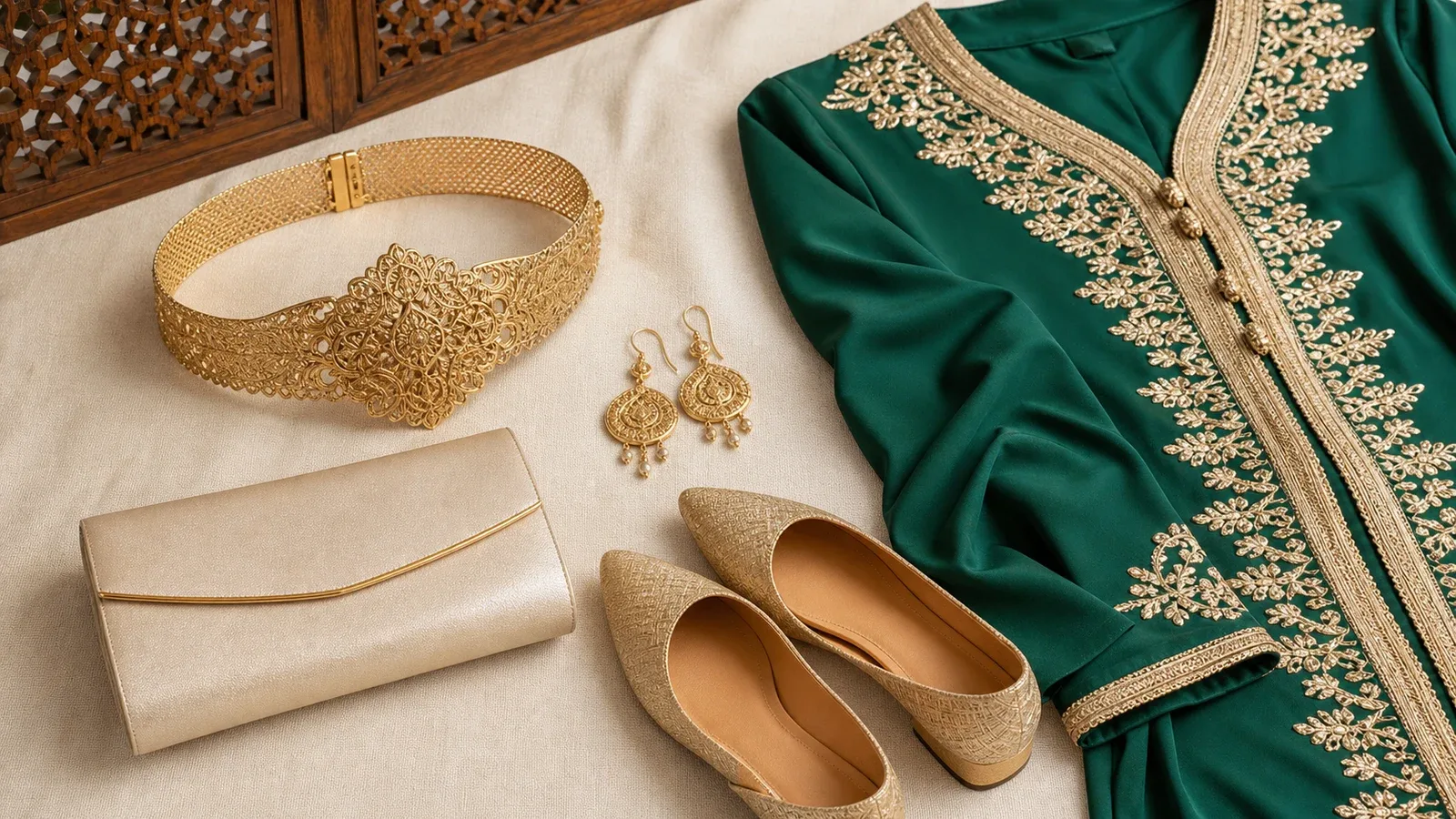
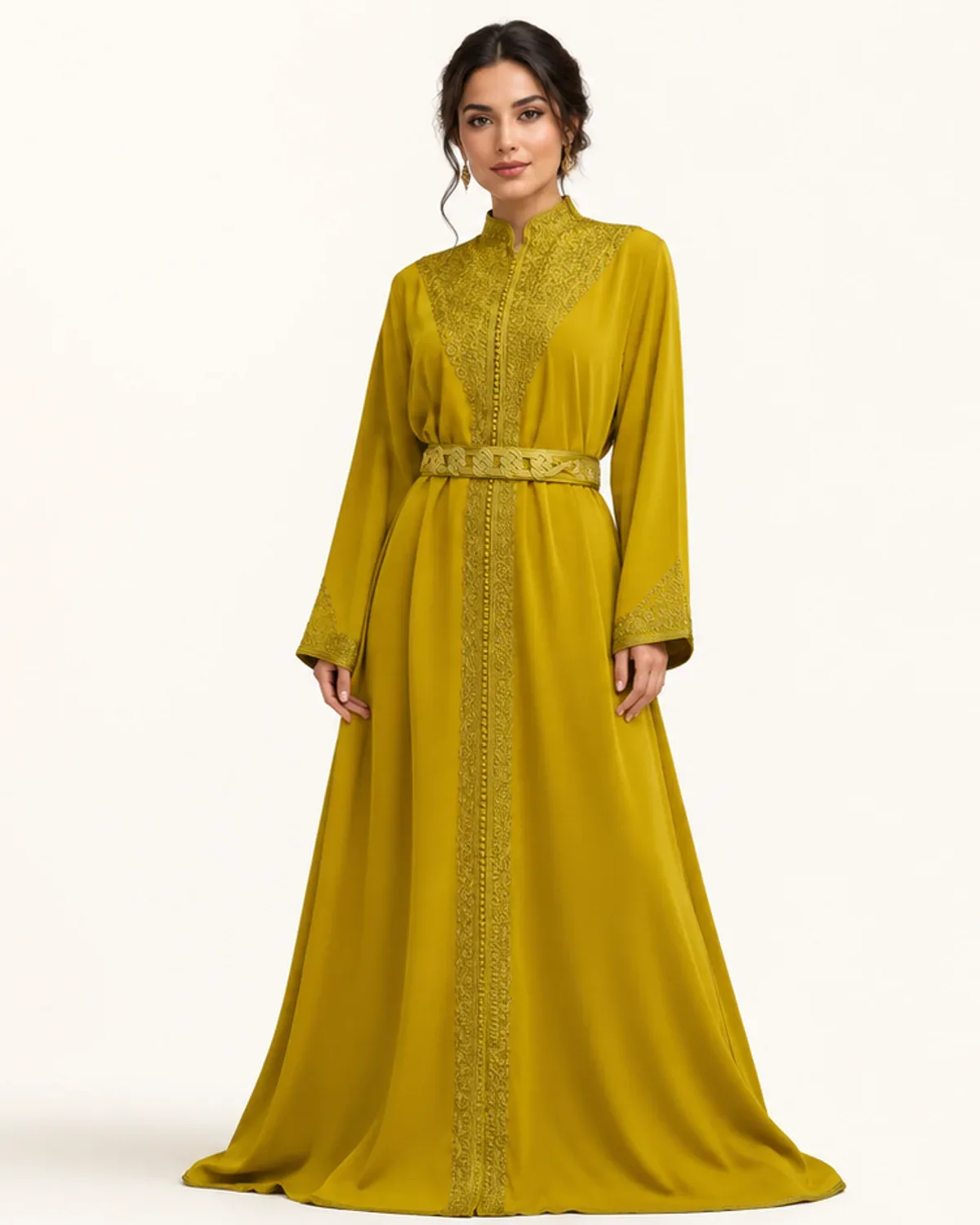
The easiest way to accessorize a Moroccan caftan is to choose one focal point. If the garment has dense embroidery, let the caftan and its belt lead, then add earrings, a compact bag and simple shoes. If the caftan is quieter, a statement mdamma or stronger jewellery can raise the formality.
Start with the caftan’s existing details
Read the neckline, cuffs and front opening before adding anything. Gold sfifa suggests warm metal; silver or crystal work supports cooler jewellery. Multicolor embroidery gives you several accent options, but repeating every color can make the outfit busy.
Ask which detail should be noticed first. The answer may be the embroidery, the color, the belt or your earrings. Everything else should create rhythm around it.
How to choose a mdamma belt
The mdamma is both structural and decorative. It defines the waist, changes the fall of the fabric and often makes a caftan feel wedding-ready.
Choose a belt that:
- echoes one metal or color already present;
- sits at your natural waist without sliding;
- closes securely while allowing a full breath;
- does not crush raised embroidery;
- remains comfortable when seated.
A wide sculpted belt brings ceremony. A narrow textile or corded belt feels softer and suits dinners or parties. Some caftans are designed to fall loose, so do not force a belt onto every silhouette.
Earrings, necklaces and bracelets
Earrings
Earrings are the most reliable wedding accessory because they do not interrupt front embroidery. Choose drops or sculptural shapes with an open neckline; choose smaller earrings when the shoulder and chest already carry heavy work.
Necklaces
Wear a necklace only when the neckline leaves visual space. A pendant that lands on sfifa or catches against aakad buttons will look untidy and may damage the garment.
Bracelets and rings
One cuff or bracelet can balance wide sleeves, but stacks may snag embroidery. If you will receive henna, keep hands and wrists clear until the paste has dried.
What shoes work with a caftan?
The caftan hem determines how much shoe is visible, but comfort determines how well you move. Good options include:
- a stable block heel for formal receptions;
- a low embellished heel for long weddings;
- a pointed flat for home parties;
- a refined Moroccan slipper when it suits the setting.
Avoid testing heel height only while standing. Sit, climb a step and walk quickly. The hem should skim rather than drag. Our Moroccan wedding guest guide includes a full comfort checklist.
The right evening bag
Choose a clutch or small top-handle bag with a smooth surface. Chain and cross-body straps can catch threads or rub against beading. Match the bag to the overall metal family rather than to the caftan color exactly.
Carry only essentials. A large bag alters the line of a formal caftan and becomes difficult to manage during greetings and photographs.
Hair and makeup
An open neckline works with soft waves, a low bun or hair swept behind the shoulders. A high, detailed neckline often benefits from an updo that reveals the craftsmanship. If the earrings are the focal point, keep hair from covering them.
Makeup can repeat one element—the berry tone of a caftan, a gold highlight, a clean black line—without matching every shade. Consider heat and the length of the event; durable, comfortable makeup is more elegant than constant repair.
Accessorizing by occasion
Moroccan wedding
Use the most formal belt and earrings, with a compact bag and stable heel. Let rich embroidery reduce the need for extra jewellery.
Henna party
Keep wrists and fingers freer, choose shoes suitable for a home or salon and consider a lighter belt. Read the henna party outfit guide.
Engagement or formal dinner
A single caftan can feel complete with earrings and a defined waist. See what to wear to a Moroccan party.
Eid or family gathering
Use softer jewellery, practical shoes and a belt that can be removed through the day.
Accessorizing different caftan colors
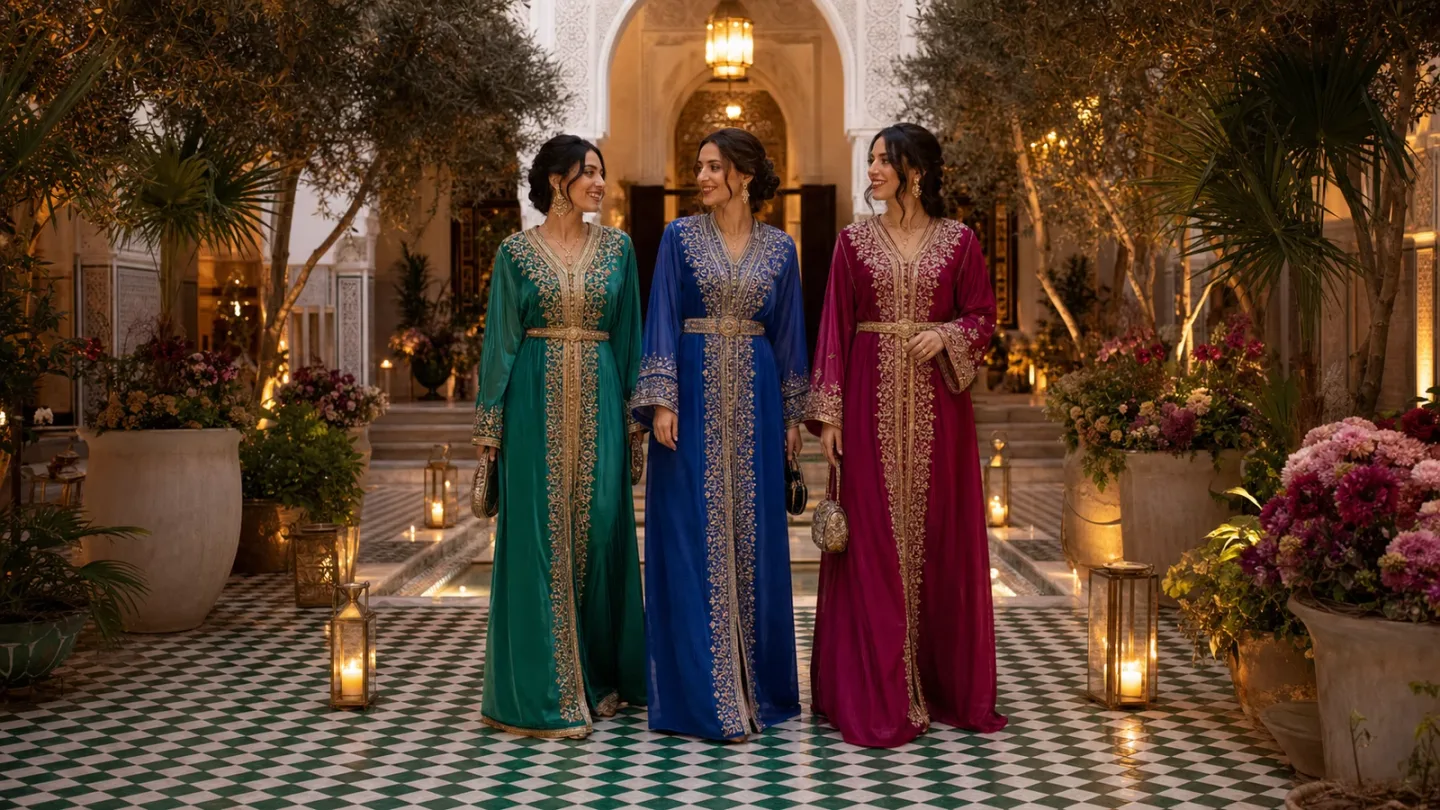
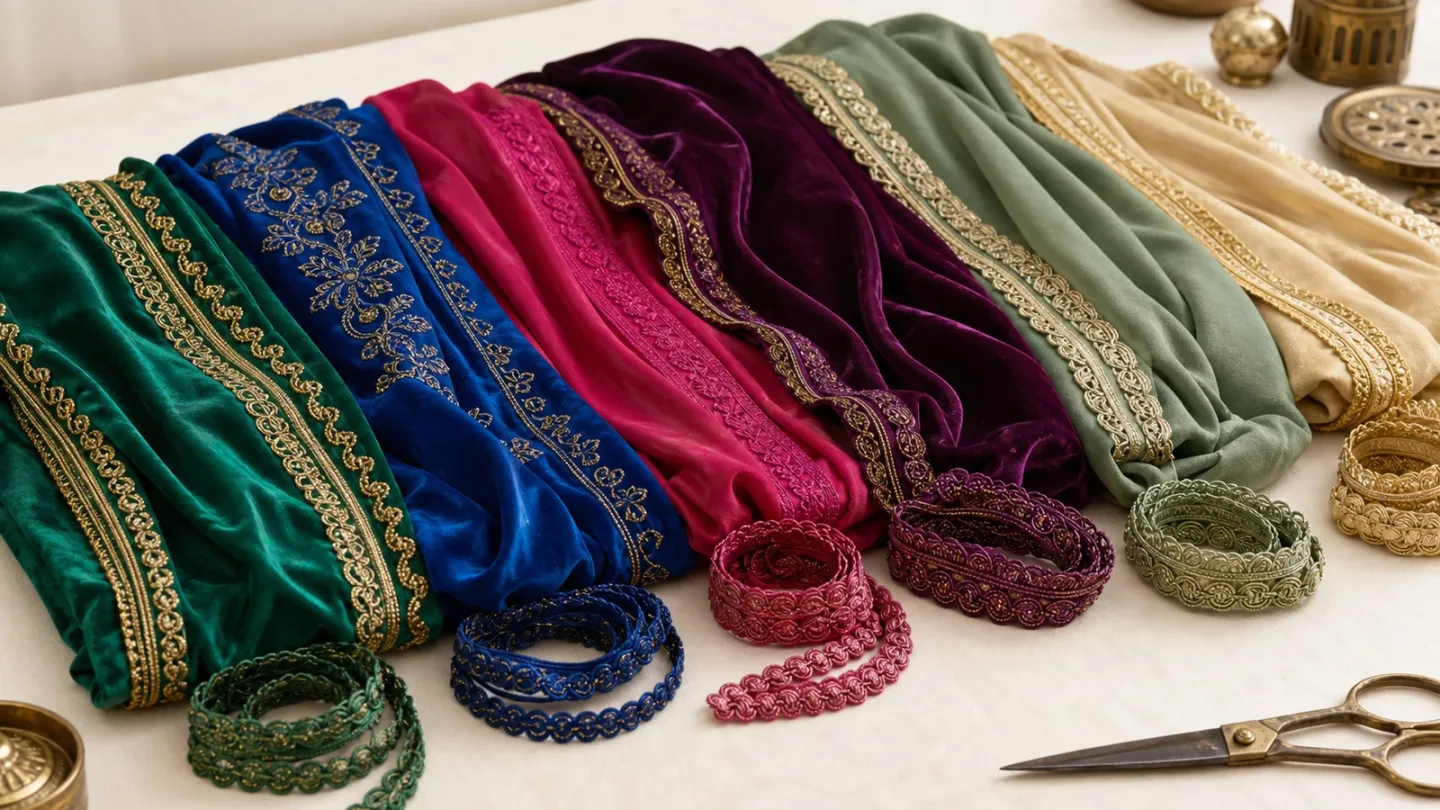
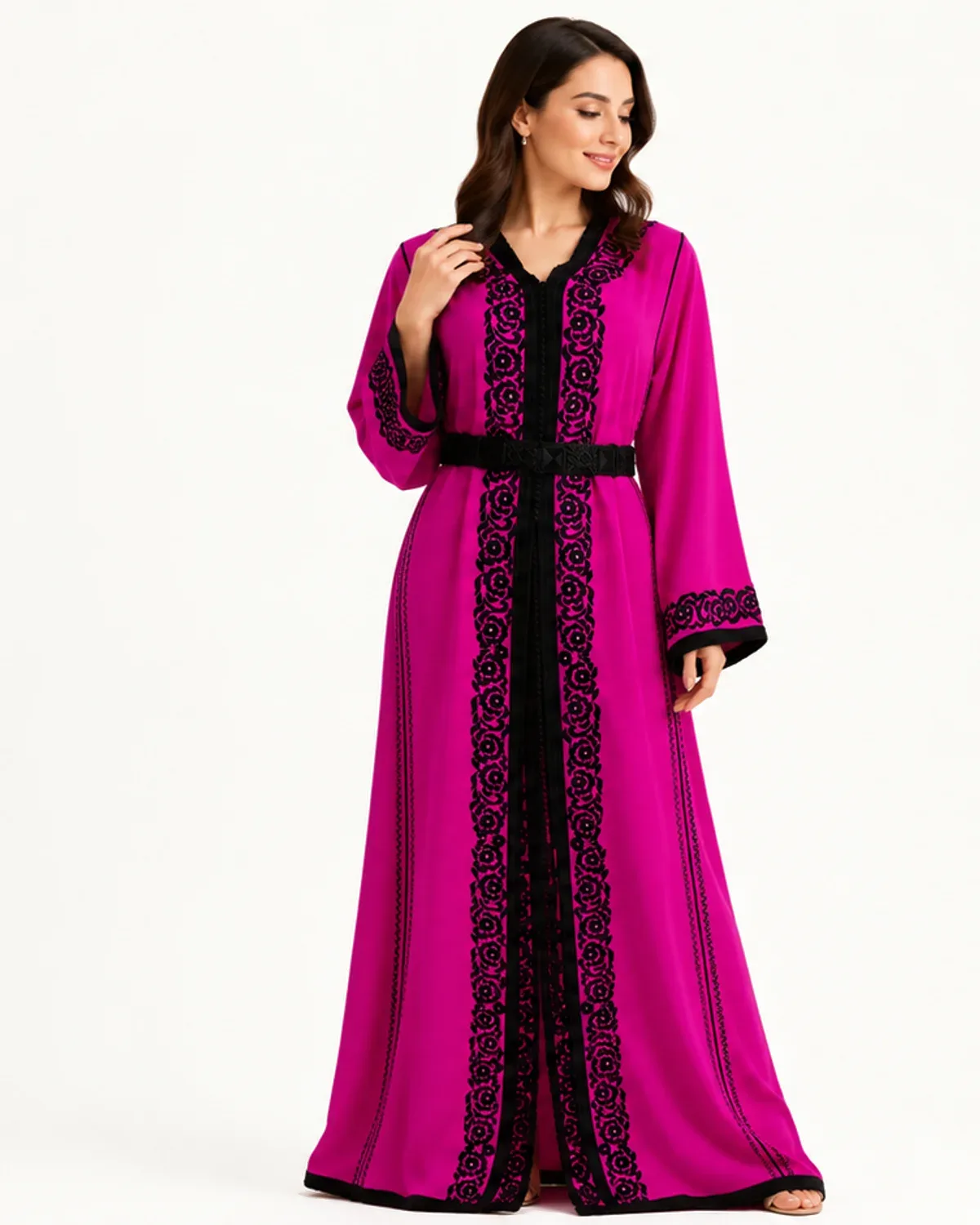
Emerald and deep green pair naturally with gold, though antique silver can create a cooler contrast. Royal blue works with gold, silver or crystal. Raspberry and fuchsia need fewer colored accessories; metallics or black usually provide enough structure. Ivory is elegant with pearl and gold, but consider the event before choosing a pale formal look.
Use the caftan color guide to coordinate season, venue and level of formality.
Common styling mistakes
- Wearing a necklace directly over elaborate neckline embroidery.
- Tightening the mdamma only while standing.
- Combining ornate belt, heavy necklace, long earrings and embellished bag without a focal hierarchy.
- Choosing a rough bag strap that damages sfifa.
- Hemming for one shoe height, then changing shoes.
- Buying accessories before deciding whether the caftan uses warm or cool metallic detail.
Frequently asked questions
Does every caftan need a belt?
No. Some are designed for a straight, fluid line. Add a belt when it improves the intended silhouette and remains comfortable.
Should jewellery match the belt exactly?
It should relate, not necessarily match. Similar metal temperature or repeated shapes are enough.
Can I wear flats with a wedding caftan?
Yes. Choose refined flats and hem the garment accordingly. Comfortable movement looks more polished than struggling in an unsuitable heel.
Build the complete look
Put on the garment, belt, shoes and jewellery together at least several days before the event. Photograph the look in daylight and evening light, then remove the element that competes most.
Start with a caftan whose craftsmanship can carry the outfit. Explore Moroccan caftans for women and check the size guide before finalizing belt placement and hem length.