Occasions · April 30, 2026
What to Wear to a Moroccan Wedding: The Complete Guest Guide
Choose a Moroccan wedding guest outfit with confidence: caftan or takchita, colors, accessories, etiquette and comfortable styling.
The short answer is that a polished Moroccan caftan is an excellent choice for most female wedding guests, while a two-layer takchita suits the grandest evening receptions and close family members. Choose a level of ornament that matches the invitation, wear a color that does not deliberately imitate the bride’s announced look, and prioritize a fit that lets you sit, eat and dance comfortably for many hours.
There is no single dress code for every Moroccan wedding. A large celebration in Fès, a garden reception in Marrakech and a family wedding in Paris may have different expectations. When in doubt, ask the bride, a relative or another guest how formal the evening will be. That small conversation is more reliable than any universal rule.
Why a caftan belongs at a Moroccan wedding
The Moroccan caftan is not a costume reserved for visitors. It is living formal dress, worn at weddings, religious celebrations and important family occasions. UNESCO inscribed the knowledge and skills of the Moroccan caftan on its Representative List of the Intangible Cultural Heritage of Humanity in 2025, recognizing both the garment and the network of weavers, tailors, embroiderers and braid and button makers behind it.
For a guest, wearing a well-chosen caftan is usually a respectful way to join the celebration. International guests sometimes worry about cultural appropriation; in practice, hosts are generally the best guides. If the family encourages traditional dress, choose a genuine Moroccan silhouette, wear it with care and avoid treating it as novelty clothing.
The spelling kaftan appears frequently in English searches, but this guide uses caftan for the Moroccan garment.
Caftan or takchita: which is right for a guest?
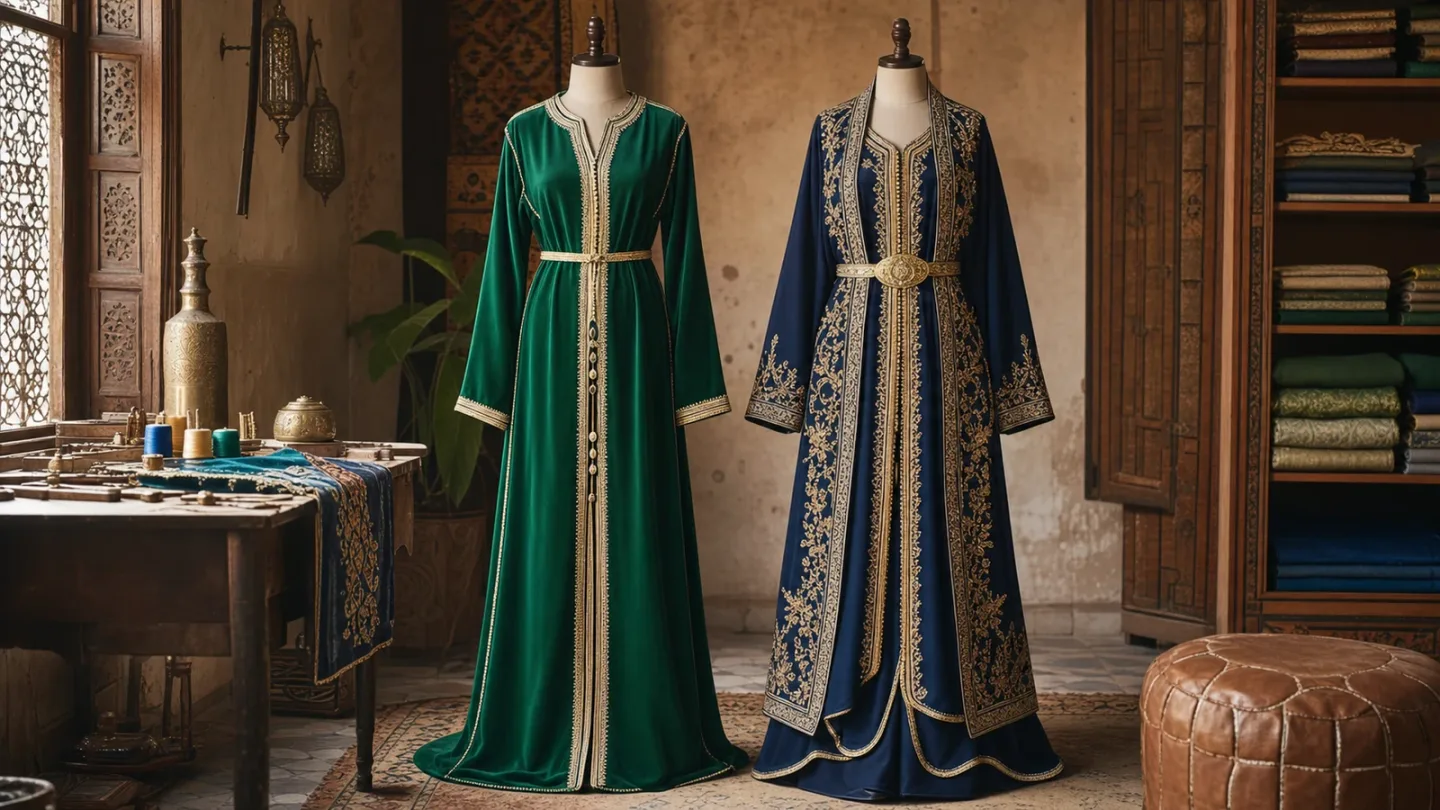
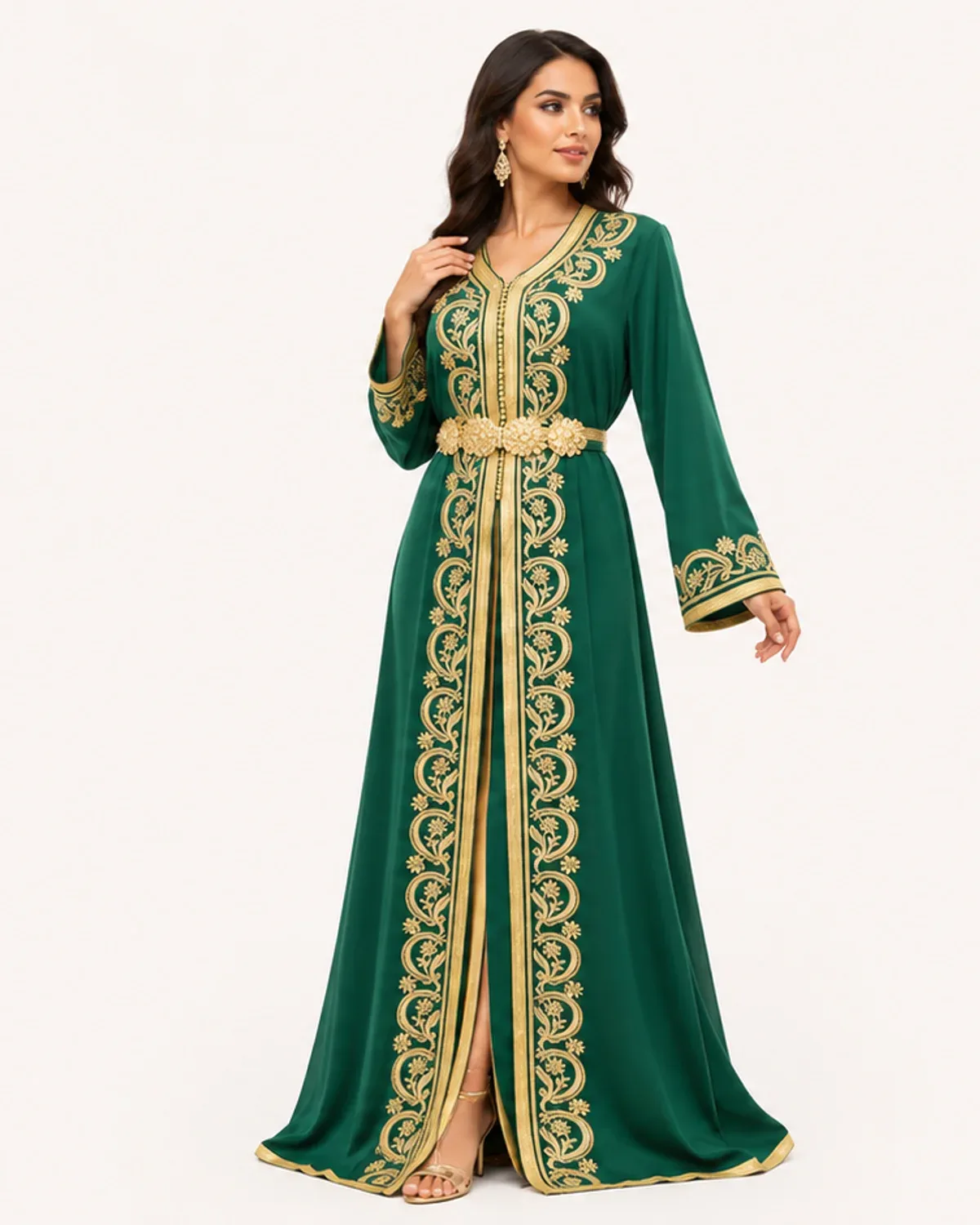
A caftan is generally a single main garment, often finished with sfifa braid and aakad buttons. It can be simple or highly decorated. A takchita creates a more ceremonial silhouette through layered pieces, usually a lower dress and an open, embellished upper layer, often defined with a mdamma belt.
Choose a caftan when:
- the wedding is daytime, intimate or semi-formal;
- you are not part of the immediate family;
- you want easier movement and less weight;
- the weather is warm;
- you want a piece that can be worn again at dinners, Eid or other parties.
Choose a takchita when:
- the invitation clearly signals a very formal evening;
- you are a close relative or part of the wedding party;
- the venue and family style favor elaborate traditional dress;
- you are comfortable wearing and managing the extra layer.
Our detailed caftan-versus-takchita guide explains the construction and formality of each. A richly embroidered caftan can be more appropriate than a poorly fitted takchita, so do not choose by garment name alone.
Match the outfit to the part of the celebration
Moroccan wedding traditions vary, and not every family holds the same sequence of events. A celebration may include a henna gathering, a family dinner and a principal reception, or combine everything into one evening.
The henna gathering
Henna events are often more intimate than the main reception. A lighter caftan, refined jellaba or elegant set can feel appropriate for a guest. Green has a strong association with the bride’s henna look in many families, but it is not a universal prohibition for guests. Ask before choosing a heavily bridal green-and-gold combination. See our Moroccan henna party outfit guide for a complete approach.
The principal wedding evening
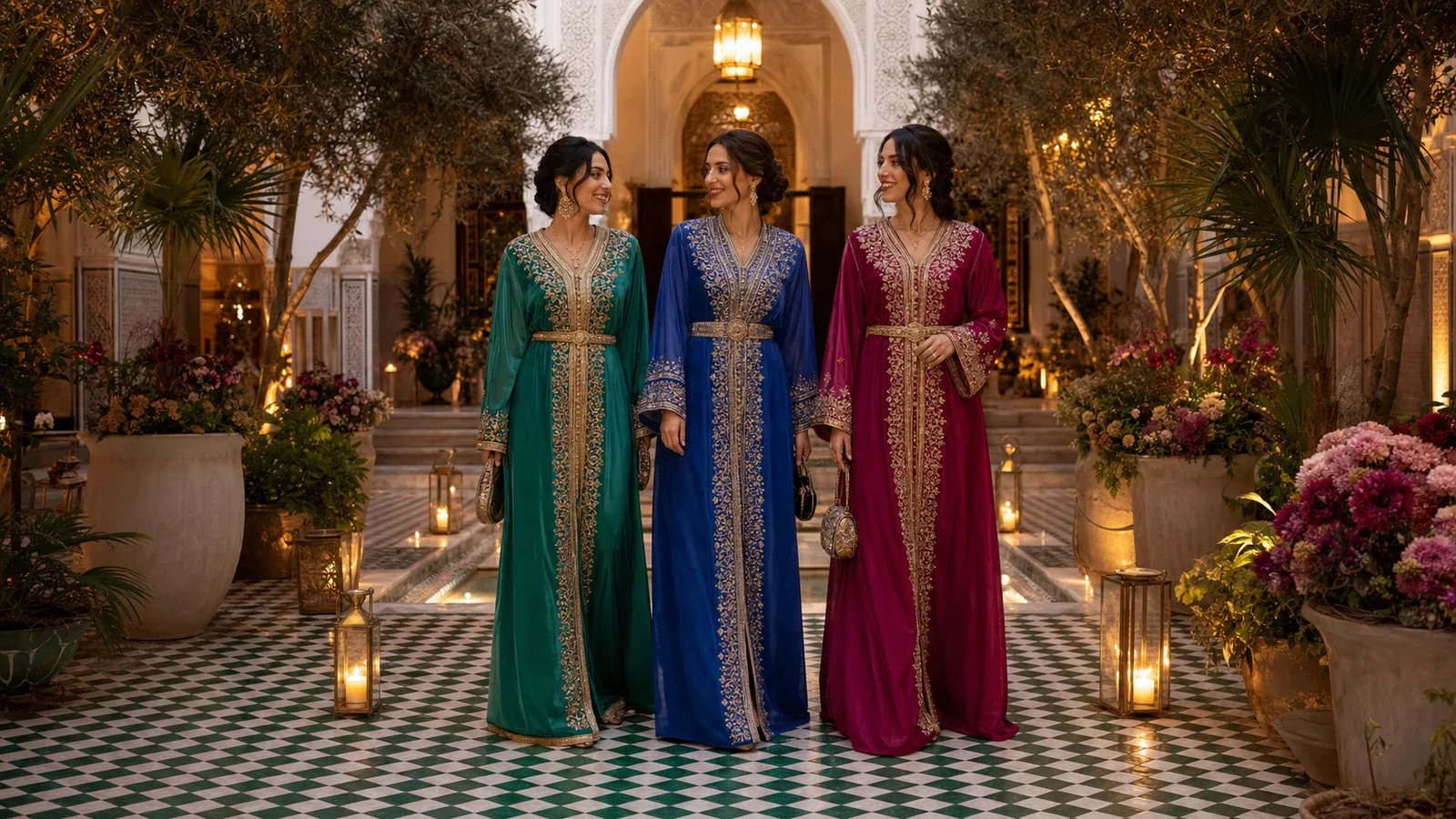
This is where guests usually dress most formally. Embroidered caftans, structured fabrics, jewel tones, metallic sfifa and takchitas all belong. The bride may change clothes several times and her styling, jewellery and ceremonial presentation make her role unmistakable. Your goal is not to disappear; it is to look celebratory without intentionally copying her announced outfit.
A daytime or next-day gathering
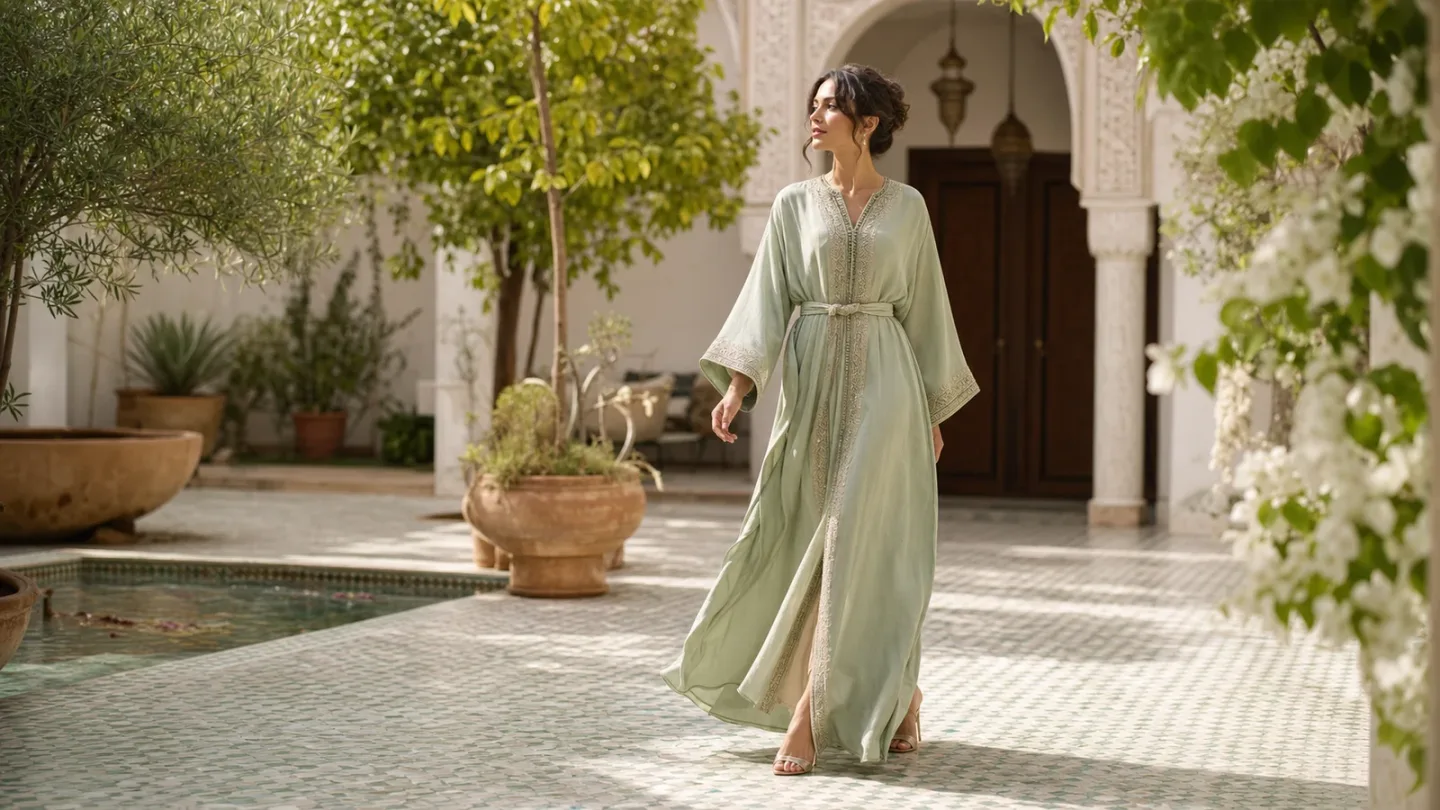
Choose a softer fabric, quieter embroidery and comfortable shoes. A single-layer caftan, modern Moroccan set or polished long dress may be easier than repeating the most formal outfit.
What colors can a Moroccan wedding guest wear?
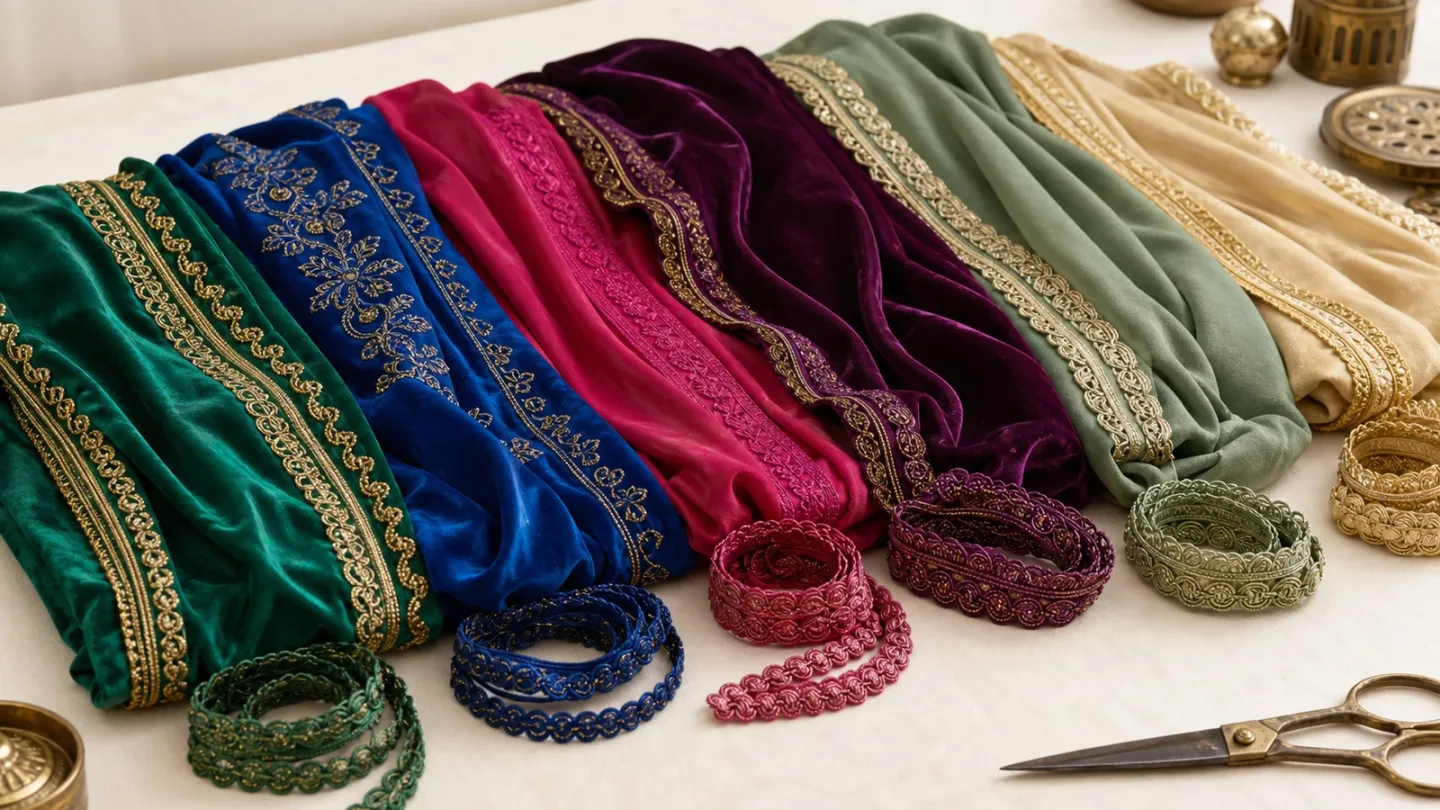
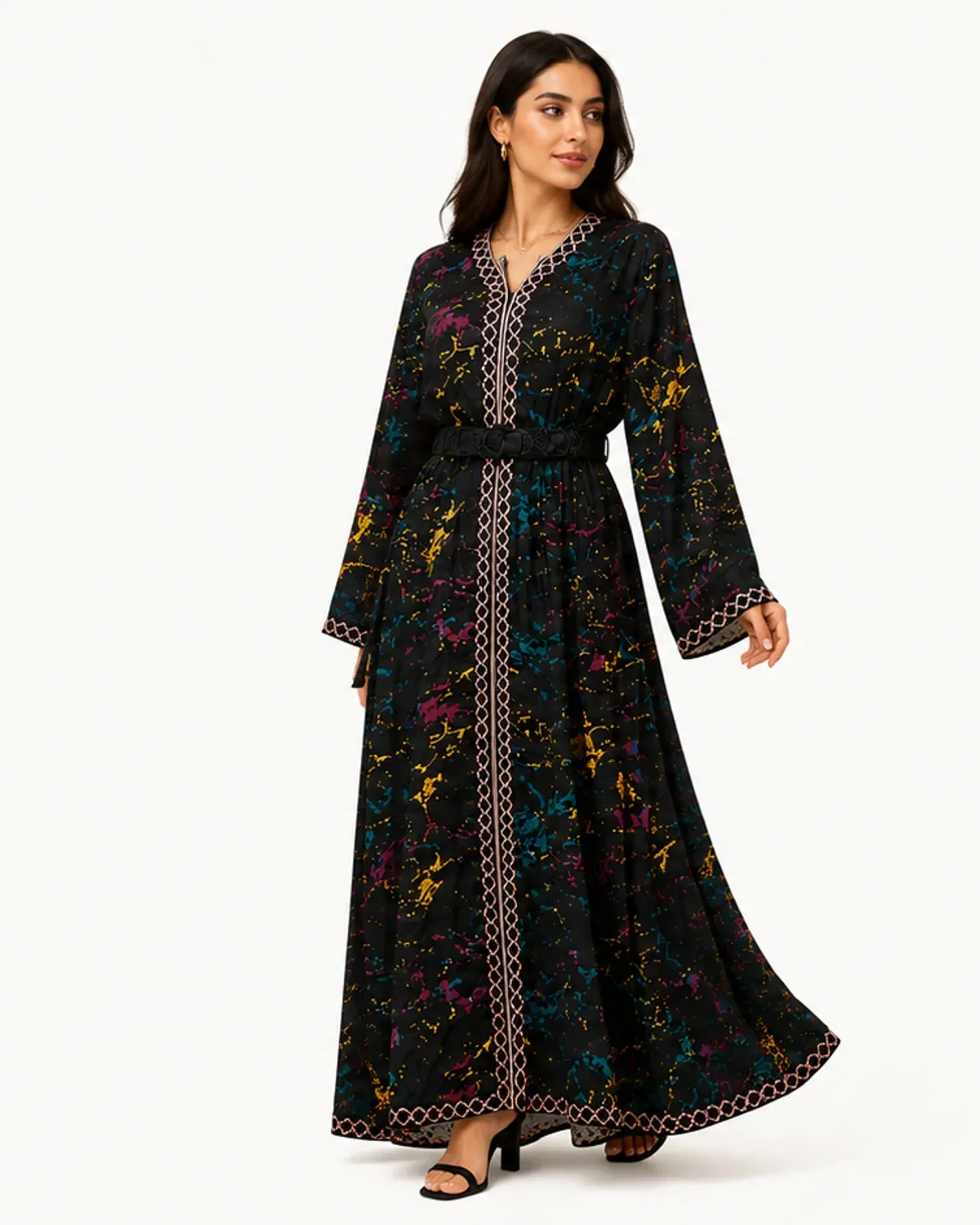
Emerald, royal blue, sapphire, raspberry, plum, teal and deep rose are reliable evening choices. Sage, dusty pink, powder blue and warm gold work beautifully for daylight and summer. A print can also be sophisticated when its trim and accessories are controlled.
White and ivory require nuance. Moroccan brides often wear several colors, and white is not treated identically in every family. Some guests wear it without concern; other families reserve pale, highly embellished looks for the bride or senior relatives. The safest approach is to avoid a head-to-toe bridal white caftan unless the hosts have confirmed it is welcome.
Black is similarly contextual. A black caftan with colorful pattern, metallic embroidery or festive accessories can look elegant at night, while an austere all-black look may feel too subdued for some celebrations. There is no need to repeat simplistic rules when a quick question to the family can settle the matter.
For more combinations, use our guide to the best caftan colors for wedding guests.
How formal should the embroidery be?
Look at the whole outfit rather than counting beads. Formality comes from the fabric, cut, finishing, belt and styling together.
- Close family or a grand ballroom: structured fabric, extensive hand finishing, a statement mdamma and formal jewellery.
- Friend or colleague at a large reception: an embroidered caftan with one strong accessory.
- Small family ceremony: lighter sfifa, tonal embroidery or an elegant printed caftan.
- Warm outdoor wedding: breathable crepe, controlled embellishment and a cut that allows airflow.
Sfifa and aakad are not generic decoration. They are defining elements of Moroccan caftan workmanship. Choose pieces where the trim sits cleanly, the front closes without pulling and the embroidery looks balanced across the body.
Accessories: let the caftan lead
Begin with the garment’s strongest detail. If the caftan has dense gold embroidery and an ornate belt, add earrings and a small clutch rather than a heavy necklace, stacked bracelets and a jeweled bag all at once. With a simpler caftan, one statement element can provide the evening finish.
A mdamma shapes the waist and can make a simple caftan more ceremonial. It should sit securely without restricting breathing or digging in while seated. Shoes need not be extremely high: a stable block heel, embellished low heel or refined flat can carry you through a long reception. Break them in before the event.
Choose a compact bag that can hold a phone, tissues and essentials without competing with the front embroidery. Our complete caftan accessories guide covers belts, jewellery, shoes, bags and hair in more detail.
Fit and comfort for a long Moroccan celebration
A Moroccan wedding can run late. You may sit through entrances and dinner, stand for photographs, then dance. Beautiful fabric cannot rescue a caftan that pulls across the shoulders or trips underfoot.
Check these points before the day:
- Raise and move your arms without straining the armholes.
- Sit for ten minutes while wearing the belt.
- Walk and turn in the exact shoes you plan to wear.
- Confirm the hem clears the floor without losing its long line.
- Check that aakad closures lie flat and remain secure.
- Pack fashion tape, a small safety pin and a comfortable shoe alternative.
Use the Caftans Yasmine size guide before ordering, and contact the atelier when your measurements fall between sizes. For hot-weather events, our summer Moroccan wedding outfit guide covers fabric weight, layering and practical comfort.
What if you do not own a Moroccan caftan?
Western formalwear can be acceptable, especially when the invitation does not request traditional dress. Choose a polished, relatively modest evening dress with a length and neckline appropriate to the family and venue. A Moroccan host may also help you buy, borrow or rent a caftan.
Do not buy a random “boho kaftan” and assume it is equivalent to a Moroccan caftan. Resort cover-ups share an English product name but not the construction, finishing or cultural place of a garment made with sfifa, aakad and Moroccan tailoring.
If you want a piece you can wear again, start with the women’s Moroccan caftan collection and choose an all-season color and level of embroidery that also works for family parties and Eid.
Frequently asked questions
Can a foreign guest wear a caftan?
Usually yes, especially when the hosts encourage traditional dress. Ask the family, choose a respectful Moroccan style and wear it as formal clothing rather than costume.
Must every woman wear a takchita?
No. A well-finished single-layer caftan is suitable for many guests and often more comfortable. Formality depends on the event and the complete styling.
Can I wear the same caftan to more than one event?
Yes. Change the belt, earrings, shoes or hairstyle to alter the level of formality. A versatile caftan should earn a place beyond one photograph.
Should shoulders and arms be covered?
Expectations vary. Traditional caftans normally provide substantial coverage, but ask the hosts if a religious ceremony or conservative family setting is involved.
A final wedding guest checklist
Confirm the dress code with someone close to the hosts. Choose caftan or takchita according to the event rather than pressure to wear the most elaborate option. Test the belt, hem and shoes while sitting and walking. Balance the embroidery with restrained accessories, and leave time for any alterations.
Most of all, dress with generosity. A Moroccan wedding welcomes color, craft and visible celebration. The right guest outfit respects the family while still feeling recognizably yours.
For authoritative cultural context, see UNESCO’s description of Moroccan caftan craftsmanship and the Moroccan National Tourism Office’s guide to Moroccan craft and weddings.