Occasions · July 26, 2026
Summer Moroccan Wedding Outfits: A Cool, Elegant Caftan Guide
Stay comfortable at a summer Moroccan wedding with lighter caftan fabrics, breathable styling, practical shoes and heat-ready accessories.
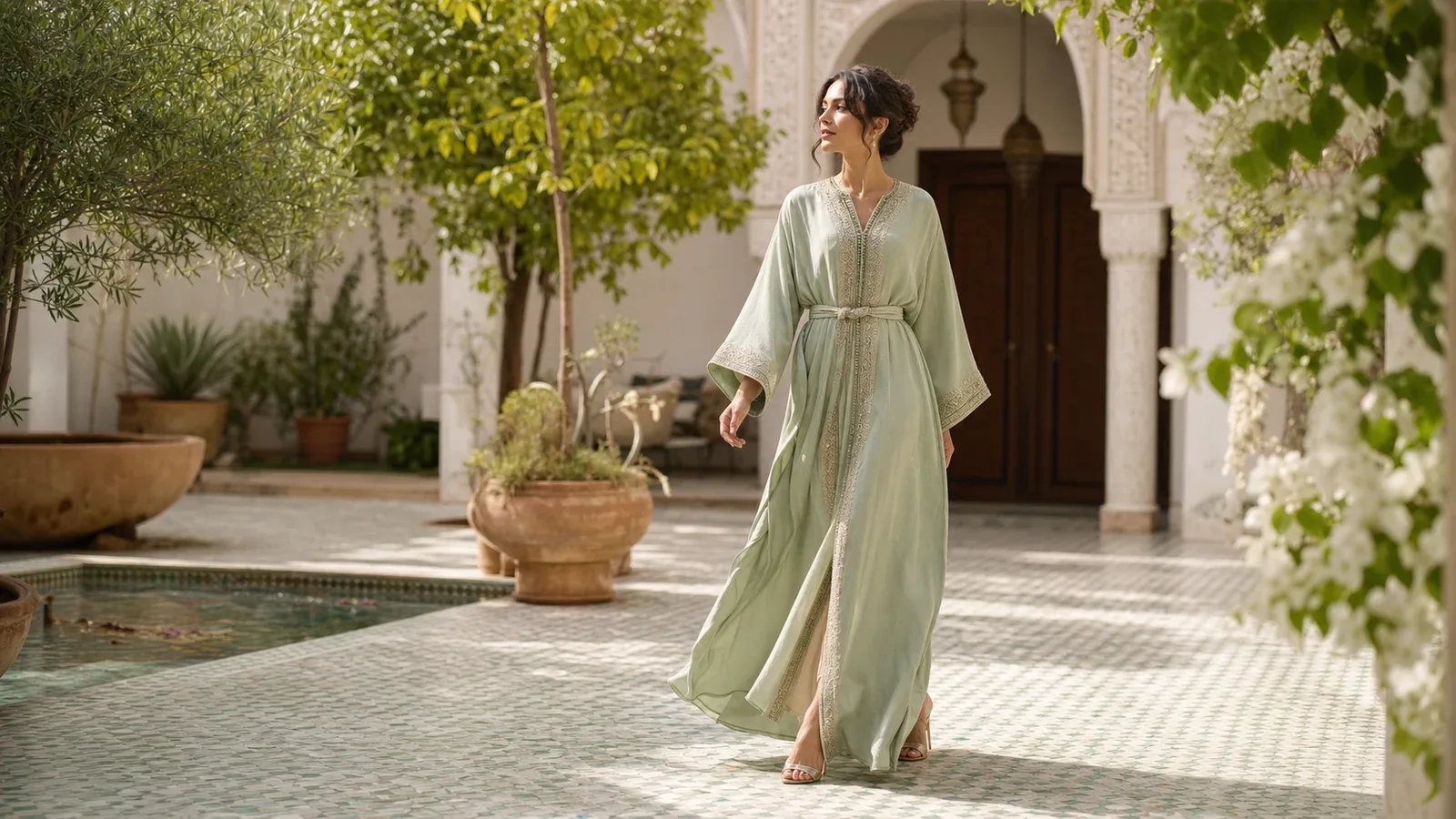
For a summer Moroccan wedding, choose a single-layer caftan in a lighter crepe or other breathable, manageable fabric, with embroidery concentrated at the neckline and cuffs rather than heavy work across the whole body. Keep the belt comfortable, select stable shoes and plan for a celebration that may continue from warm evening into late night.
Why a single-layer caftan often wins in heat
A takchita can be magnificent, but its layers add warmth and weight. Unless the event is highly formal or you are close family, a well-finished caftan usually gives a guest enough ceremony with more airflow and easier movement.
The caftan vs takchita guide explains how to compare formality without assuming that more layers always mean a better outfit.
Choose fabric by feel, not marketing language
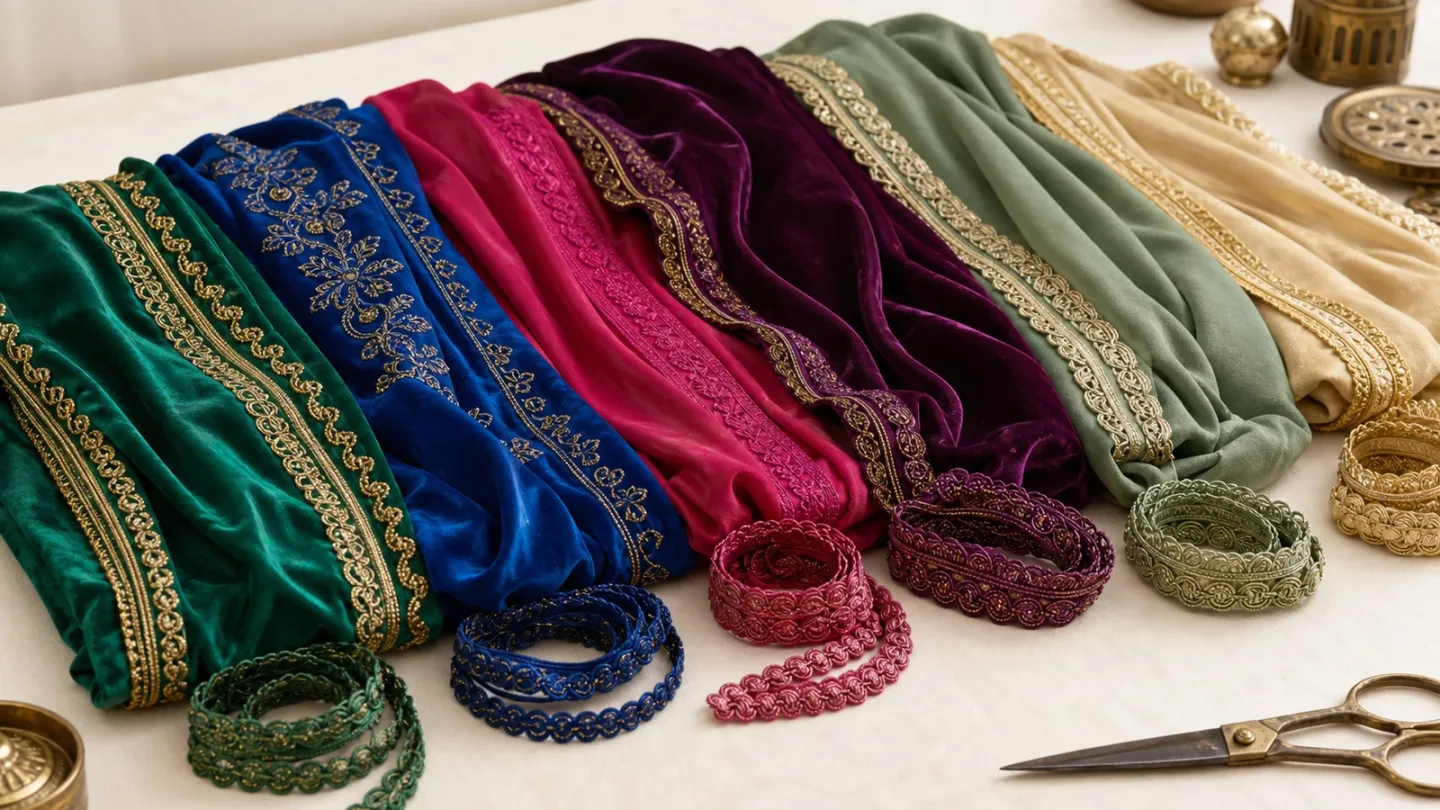
Read the actual material composition. “Silky” describes a surface, not necessarily silk. Lightweight crepe and viscose blends can drape well and remain manageable, while a dense synthetic lining may trap heat regardless of the outer fabric.
Check:
- total garment weight;
- lining and sleeve construction;
- how much embroidery sits directly against the body;
- whether the fabric recovers after sitting;
- whether the color shows moisture easily.
Summer wedding colors
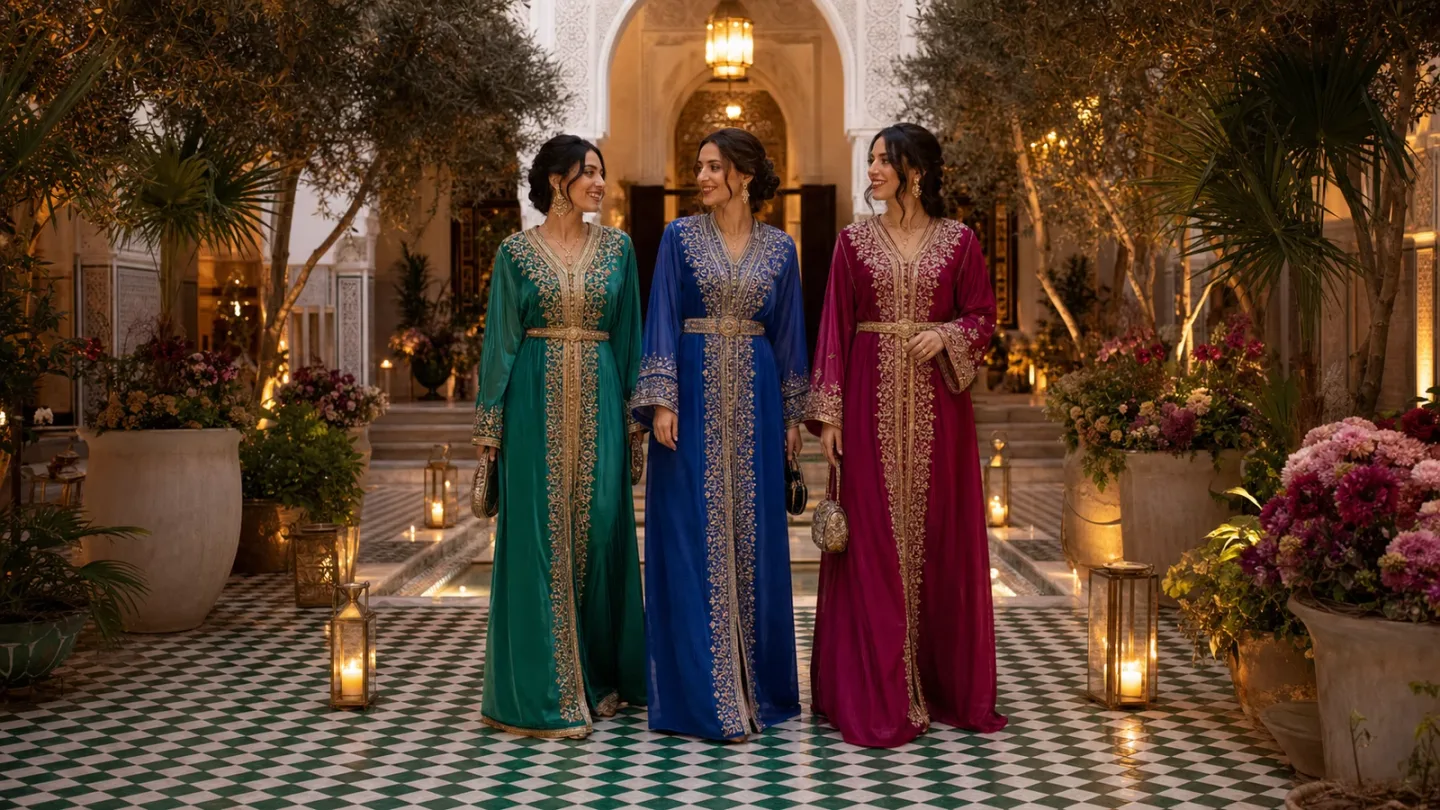
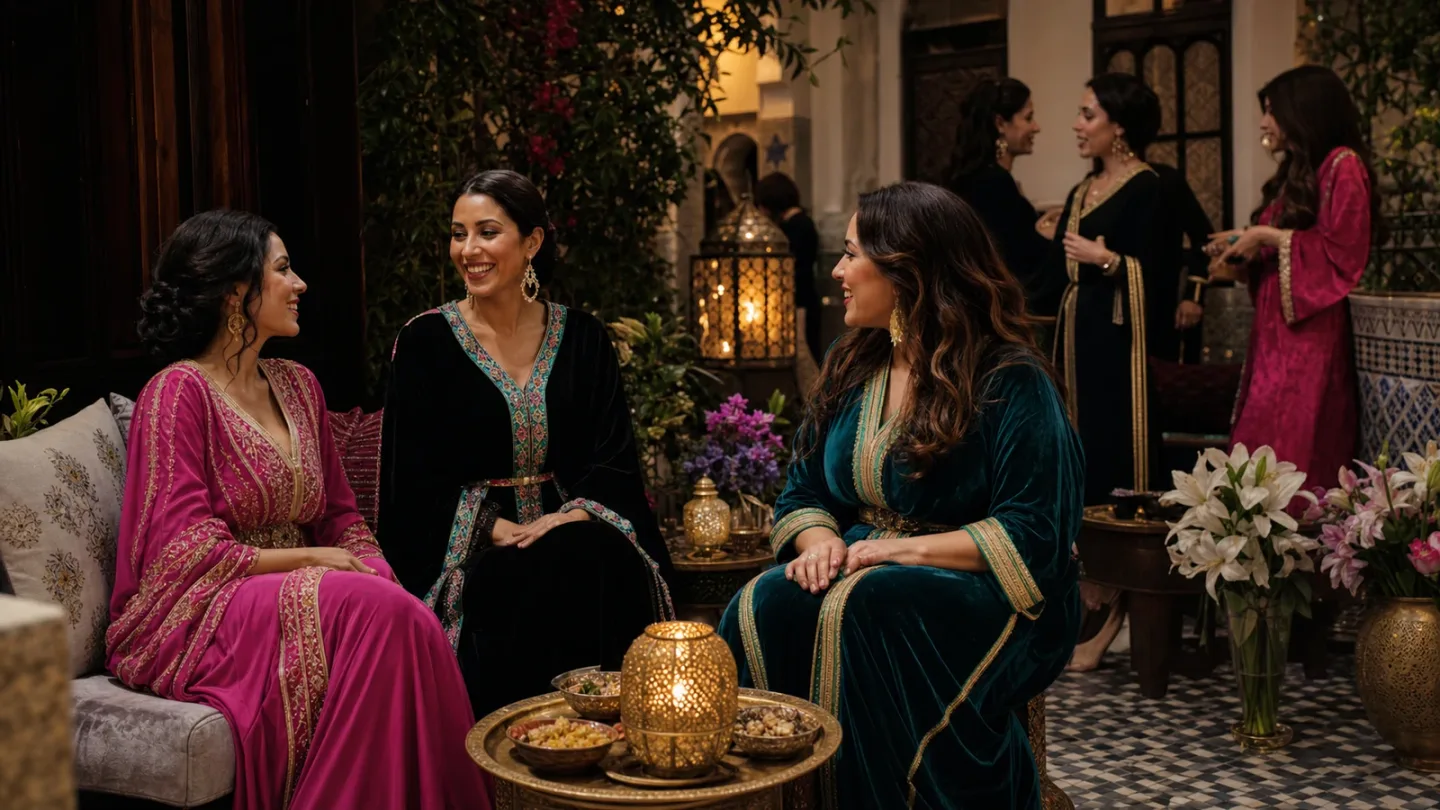
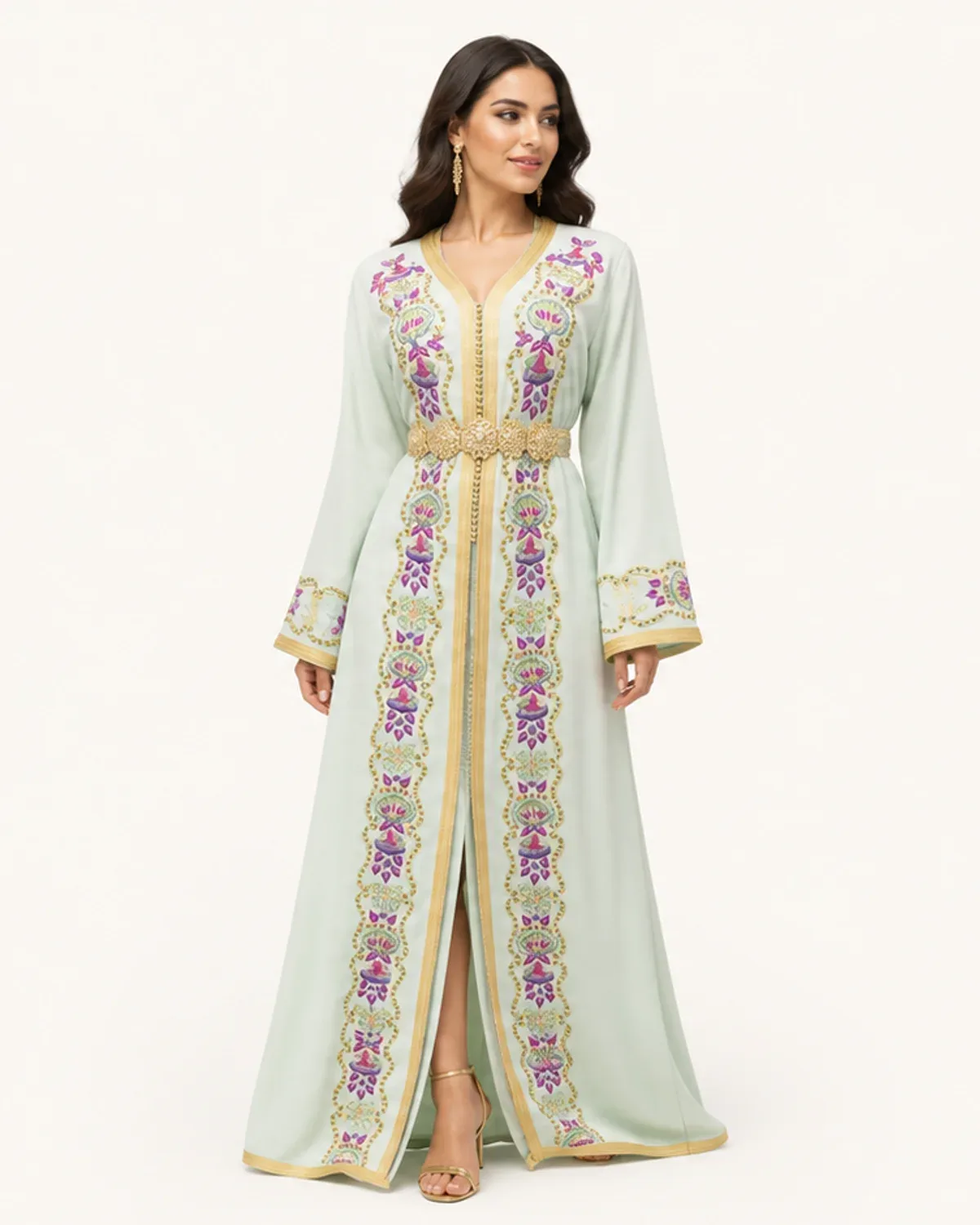
Sage, royal blue, raspberry, coral and powder blue feel lively without requiring dense embellishment. Deep jewel tones remain appropriate at night, especially in an air-conditioned hall. Avoid choosing only by the idea that pale colors are cooler; fabric weight and ventilation matter more.
White and ivory etiquette varies. Consult the wedding guest color guide before building a pale formal look.
Control the embroidery
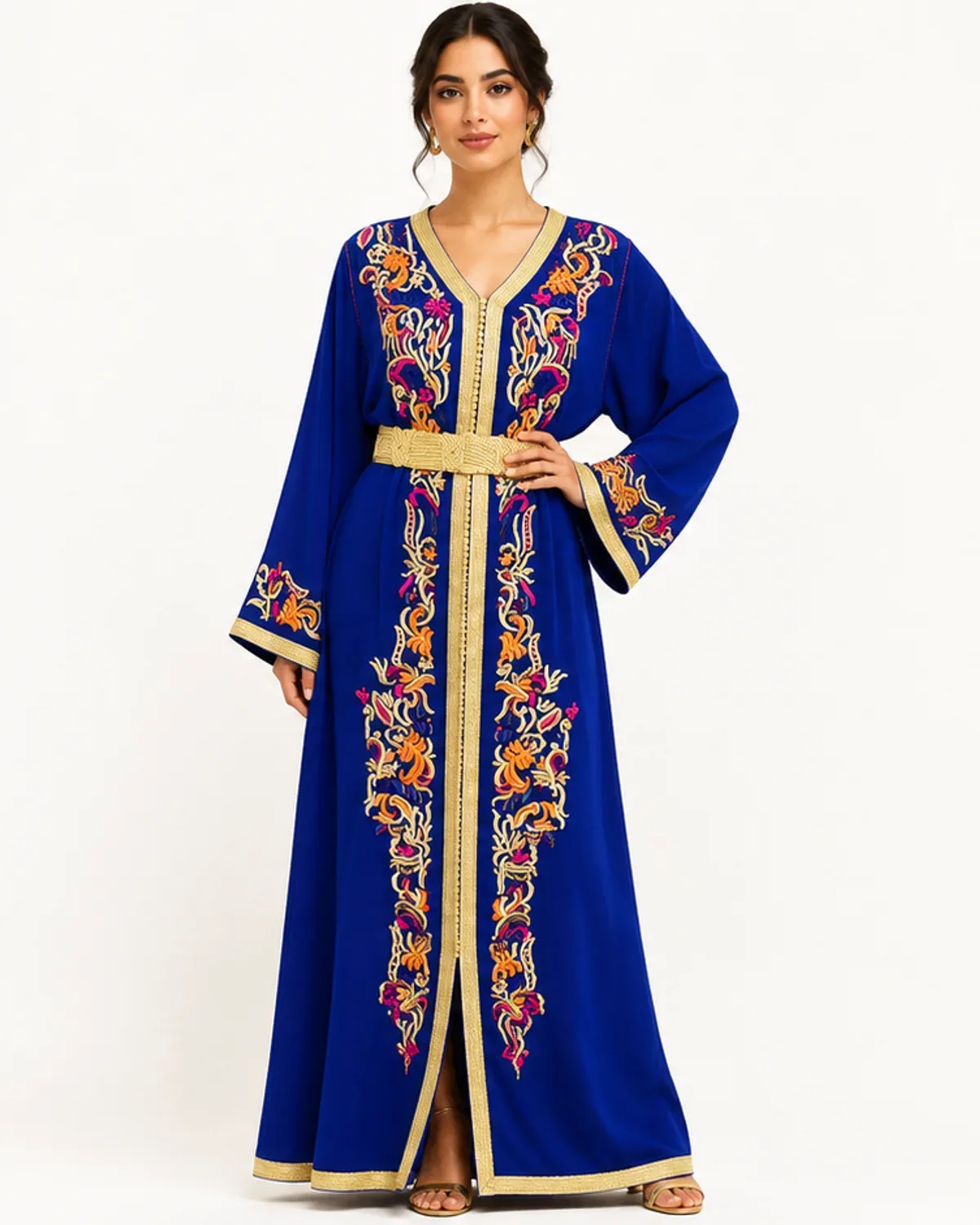
Concentrated sfifa, aakad and cuff detail can look formal while leaving larger fabric areas free to move. Heavy stones across the bodice and sleeves add both weight and heat.
If you love a detailed caftan, balance it with lighter jewellery and skip a necklace over the neckline. A strong color plus precise trim often has more impact than decoration everywhere.
Belt strategy for hot weather
Wear a mdamma only as tightly as needed to hold the silhouette. Test it while seated after a meal, not just in front of a mirror. A narrower or textile belt may be better for an outdoor event than a rigid wide belt.
You can also wear the formal belt for entrances and photographs, then change to a softer option later if the garment is designed for it.
Shoes for courtyards, gardens and long nights
Venue matters. Thin stilettos sink into grass and catch between courtyard stones. Choose a block heel, stable low heel or embellished flat. Hem the caftan for the actual shoe and carry a second pair only if the hem also works with it.
Open shoes may feel cooler, but straps can become uncomfortable after hours. Break them in before the event.
Hair, makeup and bag
An updo or swept-back style can keep hair away from the neck and reveal embroidered shoulders. Choose makeup that withstands heat without requiring constant layers.
Carry blotting paper, a small fan if appropriate, tissues and water access information. Use a smooth clutch rather than a strap rubbing against warm, damp embroidery. The caftan accessories guide covers the full styling balance.
From outdoor heat to air conditioning
Summer venues may combine a hot arrival with a cool interior. A lightweight wrap can help, but ensure it does not obscure or snag the caftan’s front work. Keep it in the car or bag rather than wearing it through photographs.
If the event begins in daylight and ends late, choose a color and makeup that work under both natural and artificial light.
Fit checks for a summer caftan
Leave enough ease through shoulders and underarms. A garment that sits very close becomes warmer and may show pulling once you move. Raise your arms, sit and dance briefly during the fitting.
Use the size guide and ask for help when between sizes. Alterations should preserve the centered sfifa and aakad line.
Travel and last-minute preparation
If the wedding requires travel, carry the caftan in a breathable garment bag and hang it immediately on arrival. Do not fold a rigid belt inside the garment or place heavy shoes on top of embroidery. Ask the accommodation about an iron or steamer before using it; metallic thread and embellishment may require low heat and a protective cloth.
On the day, dress in a cool room and put the belt on last. Drink water before leaving, but avoid carrying a large bottle in a formal bag. A planned ride, tested shoes and a small repair kit do more for your composure than adding another layer of jewellery.
Frequently asked questions
Is a takchita too hot for summer?
It can be, depending on fabric, lining, venue and construction. Close family may still choose one for formality. Test the complete layered outfit in comparable temperatures.
Can I wear a short caftan?
For the principal wedding reception, a full-length silhouette is usually more formal. A shorter dress or set may suit a daytime or next-day gathering.
What should I bring?
Comfortable backup shoes, blotting paper, a small repair pin and any wrap needed for air conditioning. Keep the bag compact.
The cool, polished formula
Choose a single-layer caftan with room to move, concentrated craftsmanship, a comfortable belt and venue-appropriate shoes. Color can remain rich even when fabric and accessories are light.
Read the complete Moroccan wedding guest guide and browse Moroccan caftans for women early enough to test the full outfit before the celebration.