Moroccan craft · May 22, 2026
Caftan vs Takchita: What Should a Wedding Guest Wear?
Understand the difference between a Moroccan caftan and takchita, how formal each feels, and which one suits a wedding or party.
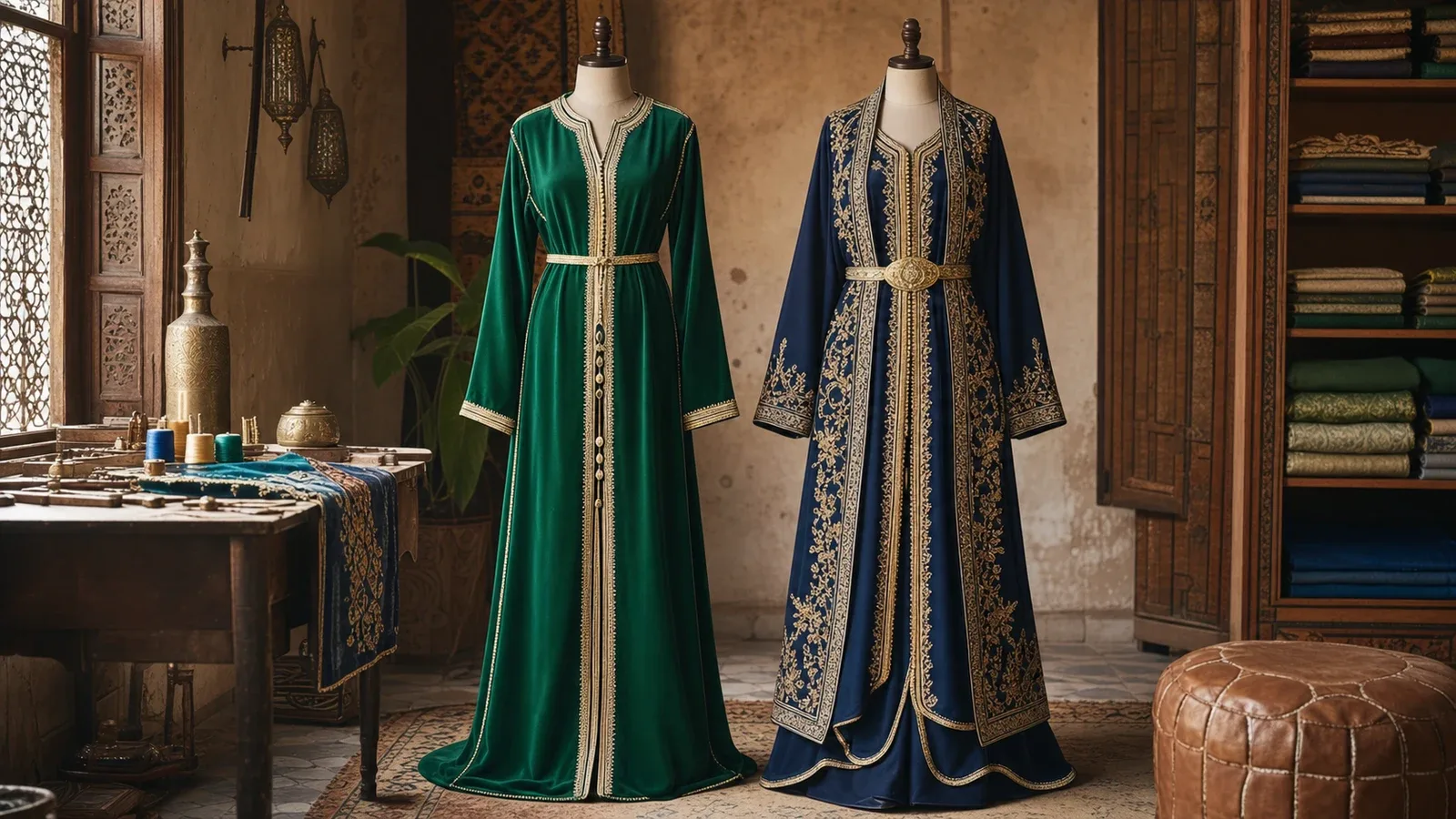
The essential difference is structure: a Moroccan caftan is usually one main robe, while a takchita creates a layered ceremonial look with a lower dress and an embellished upper layer. Both can be formal. For most wedding guests, a refined caftan is versatile and comfortable; a takchita suits a grand reception, close family role or deliberately majestic look.
What is a Moroccan caftan?
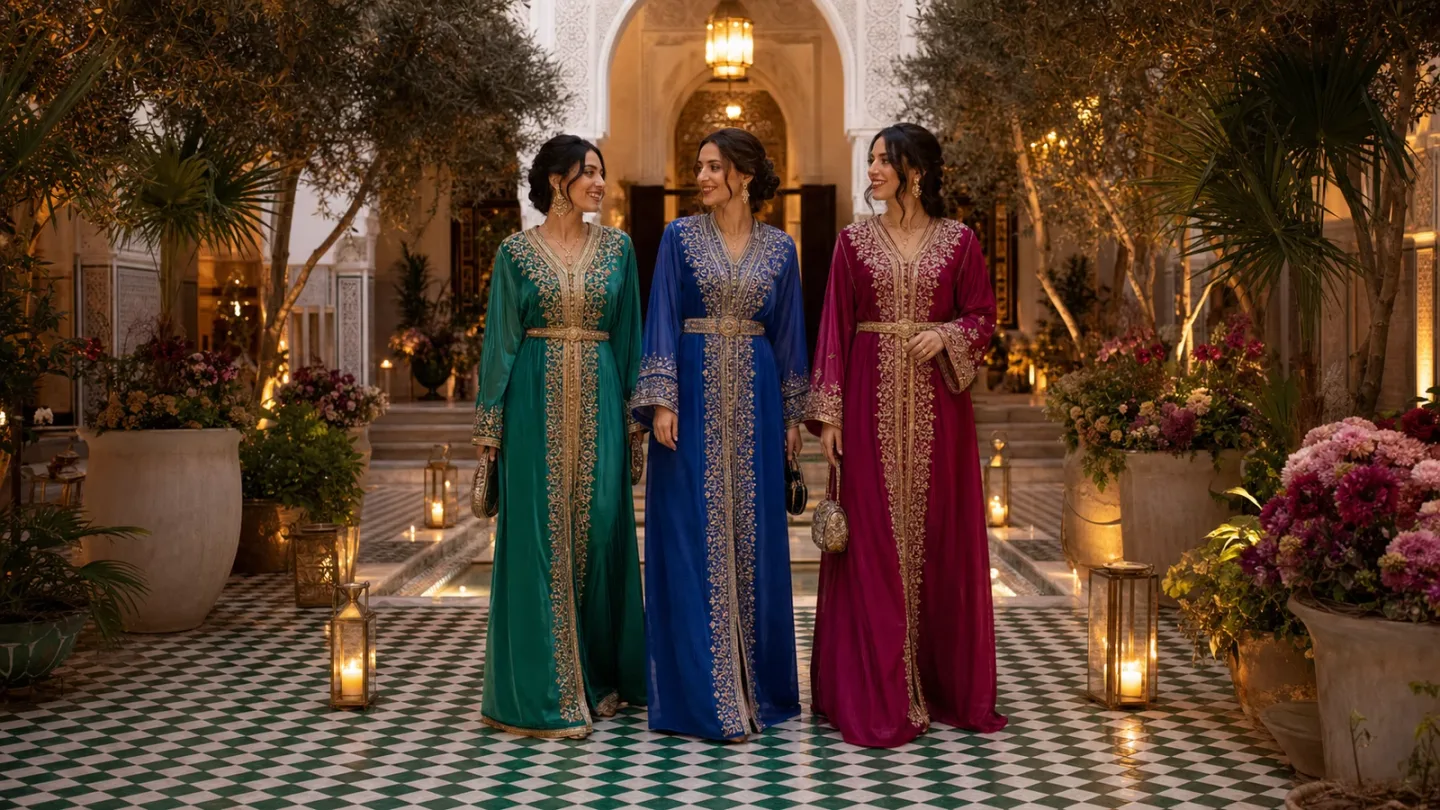
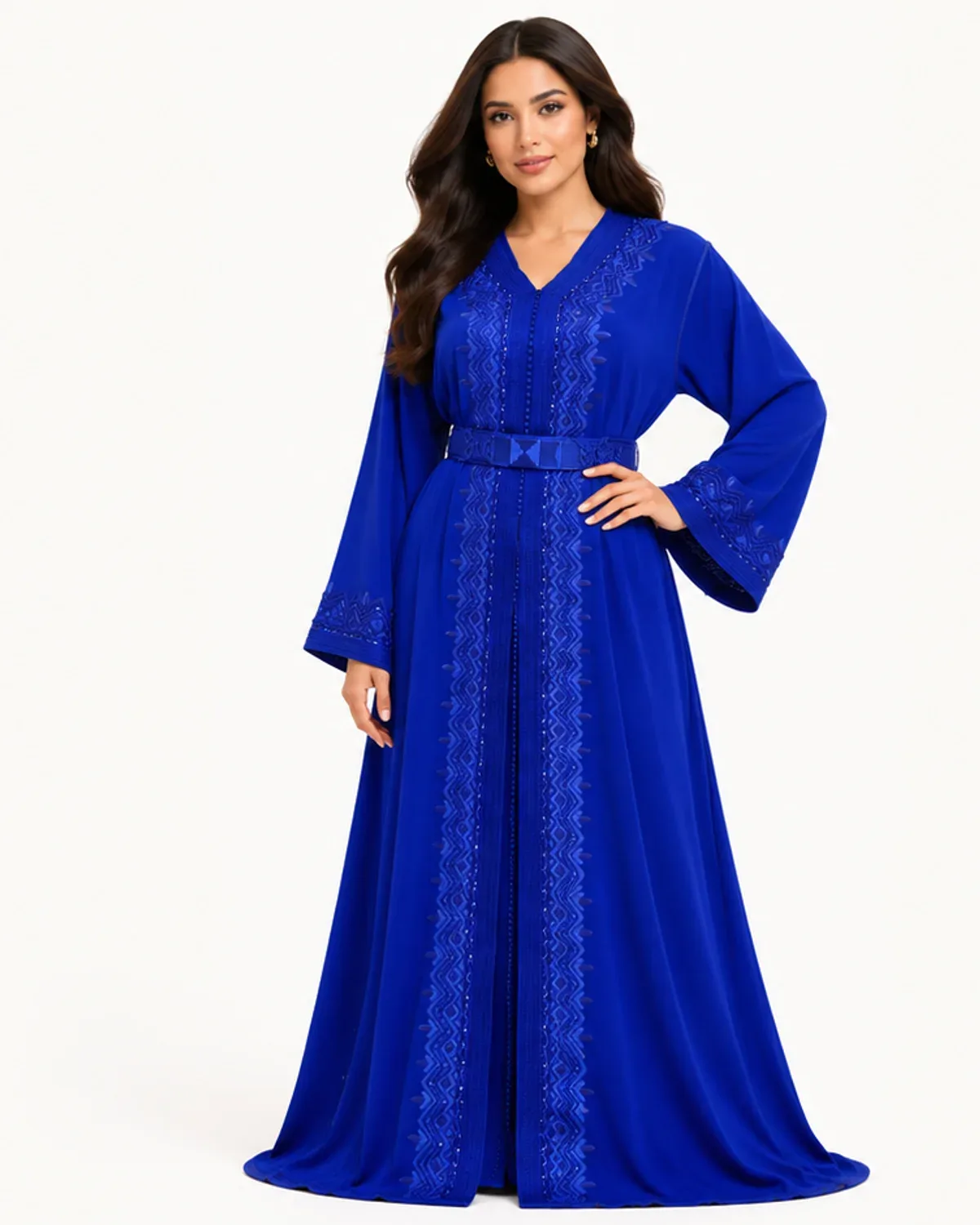
A Moroccan caftan is a long garment shaped by its front opening, sfifa braid, aakad buttons and hand-finished decoration. Fabric and workmanship can take it from quiet daytime elegance to full wedding formality. It may be worn loose or with a belt.
The word “kaftan” is also common in English retail, but many garments sold under that spelling are loose resort dresses. A Moroccan caftan is distinguished by its tailoring and craft vocabulary, not merely by being long and flowing.
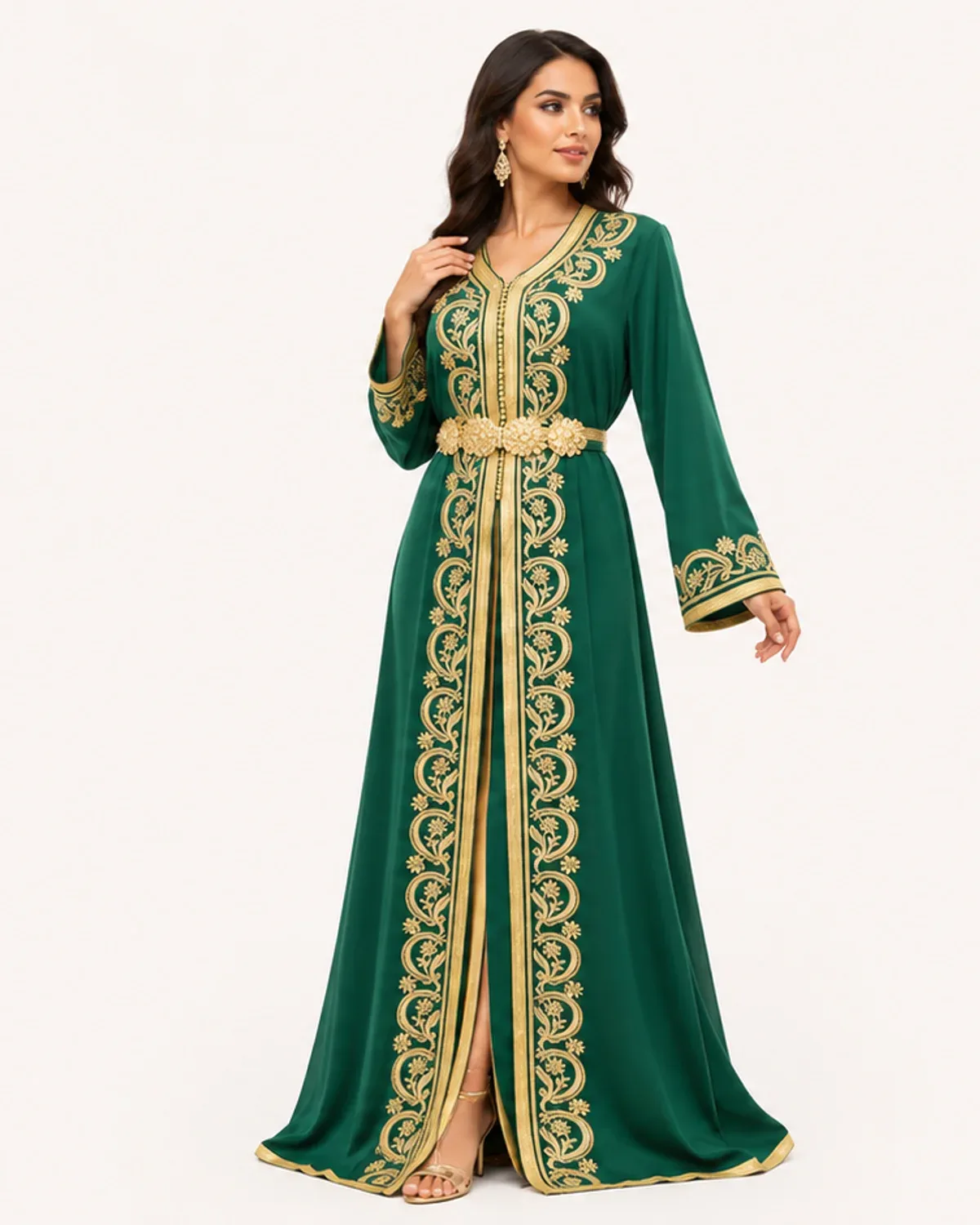
What is a takchita?
A takchita is a layered Moroccan formal ensemble. Terminology and construction can vary among makers, but it commonly combines a lower caftan-like dress with an open outer layer. A decorative mdamma defines the waist and holds the composition together.
The upper layer allows contrasting fabric, transparency, embroidery and movement. That visual depth is why the takchita is closely associated with weddings and major ceremonies. It is not automatically “better” than a caftan; it is a different level of structure and presence.
Which looks more formal?
A takchita generally signals greater ceremony because of its layers and belt. Yet an exceptional caftan in velvet, brocade or richly worked crepe can be more formal than a simple takchita. Judge:
- fabric weight and luster;
- density and quality of sfifa, aakad and embroidery;
- fit through shoulders, waist and hem;
- the formality of the belt;
- how jewellery, shoes and hair complete the look.
For the principal evening of a large Moroccan wedding, both can work. Our complete Moroccan wedding guest guide helps match the choice to your relationship with the couple and the event.
Choose a caftan when comfort and versatility matter
A caftan is often the better guest purchase because it can move between occasions. Wear it with a mdamma and formal earrings at a wedding, then use a softer belt or no belt for Eid dinner or a family party.
It also reduces bulk in summer and makes sitting easier during a long reception. If you are new to Moroccan formalwear, the simpler construction is easier to fit and style confidently. Read how to choose a Moroccan caftan before comparing sizes and embroidery.
Choose a takchita when the event calls for ceremony
A takchita makes sense when you are the mother, sister or close relative of the couple, the invitation is explicitly traditional and formal, or the venue supports a full-length layered silhouette. It also suits someone who already understands the fit and can move comfortably in the garment.
Ask what other close family members are wearing. Coordination does not mean matching, but it prevents one person arriving in a casual caftan while everyone else wears formal takchitas—or the reverse.
Can a wedding guest wear a takchita?
Yes. The bride is distinguished through her complete ceremonial styling, not because guests are prohibited from layered clothing. Still, avoid intentionally reproducing a specific bridal look communicated by the family. Color rules differ, so ask rather than relying on a universal ban.
For a henna event, a lighter caftan is often easier and less bridal than a very ornate green-and-gold takchita. See the Moroccan henna party outfit guide.
Caftan vs takchita for other Moroccan parties
For an engagement party, close family may choose takchitas while other guests wear formal caftans. For dinner, a birthday, a baby celebration or an at-home gathering, a single caftan usually feels more natural. Our Moroccan party outfit guide maps the level of embroidery to different celebrations.
The most useful wardrobe begins with the event you actually attend. Do not buy the most elaborate garment simply because it appears impressive online.
Fit differences to check
With a caftan, confirm that shoulders sit smoothly, the front closes without pulling and the hem works with your shoes. With a takchita, check both layers independently:
- The lower layer should not bunch or twist.
- The upper layer should fall symmetrically when open.
- The belt must hold the layers without restricting breathing.
- Sleeve and hem lengths must remain practical together.
- Embellishment should not catch against the lower fabric.
Use the size guide and provide full measurements for made-to-order work. A layered garment magnifies small fit problems.
How to style each without overdoing it
With a richly worked takchita, let the layers and belt provide the statement. Choose earrings, a compact bag and shoes that support rather than compete. With a quieter caftan, you can add a stronger mdamma, sculptural earring or metallic clutch.
The rule is balance, not minimalism. Moroccan celebrations welcome ornament, but the eye still needs a clear focal point. Our caftan accessories guide gives specific combinations.
Plan the purchase around real use
Before ordering, list the events where you expect to wear the garment during the next two years. A caftan that works for a wedding, Eid and formal dinner may justify more careful tailoring than a highly specific trend. If you are considering a takchita, include storage, pressing and travel in the decision: two embellished layers require more space and more deliberate care.
Allow time for measurement questions and alterations. Do not order by a familiar ready-to-wear size alone, especially when the garment is belted. Shoulder width, bust, hip, sleeve and finished length all affect how the front work sits. Photograph the complete look during the fitting so you can check that both sides fall evenly.
The practical verdict
Choose a caftan for adaptable elegance, warm weather, easier movement and repeat wear. Choose a takchita for layered formality, close-family prominence and grand evening ceremony. If both are acceptable, the better option is the one fitted correctly and worn with ease.
Explore the available women’s Moroccan caftans and use the atelier’s measurement support before ordering. The garment should serve the celebration—not distract you from it.